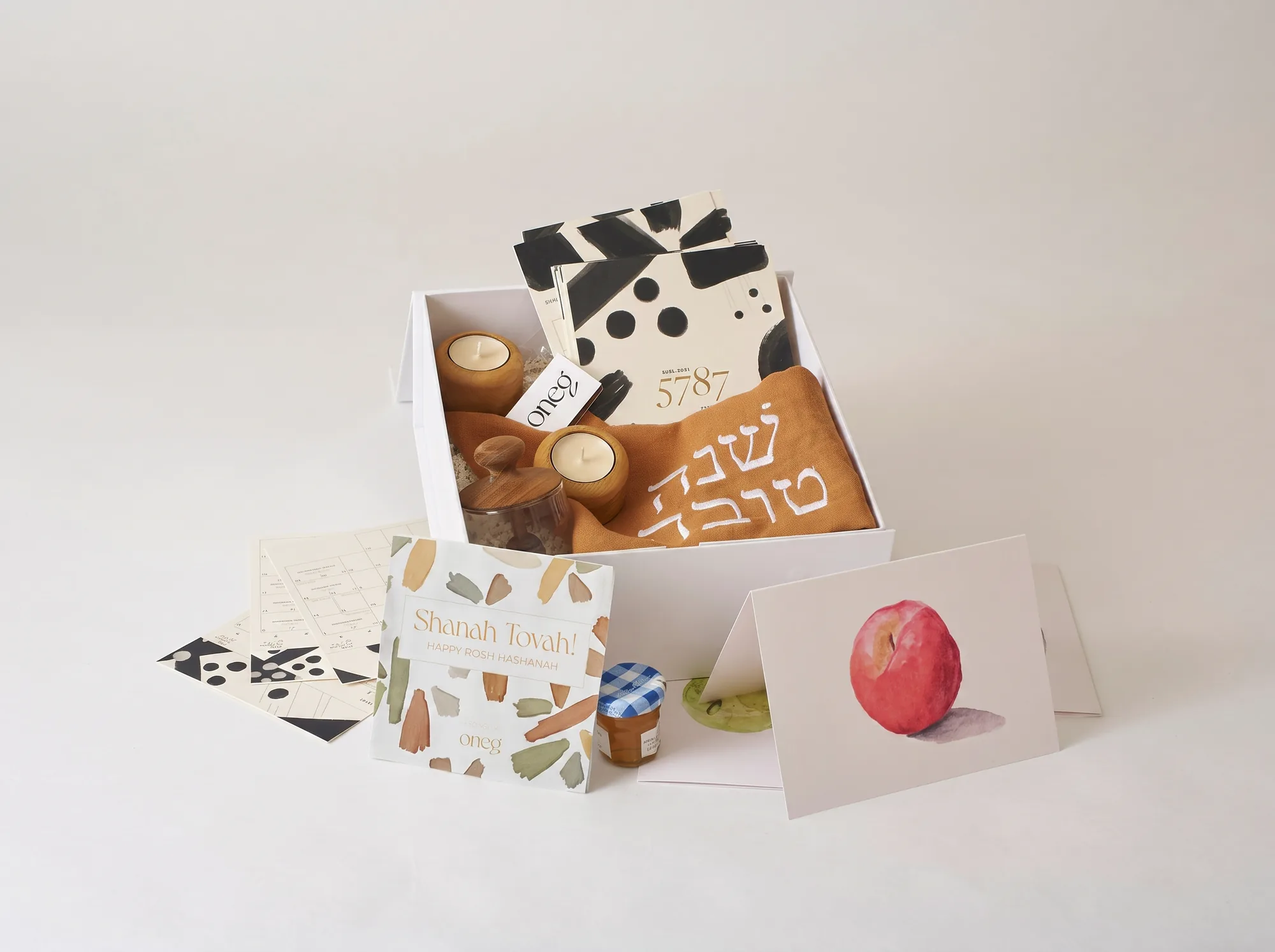
Overview
Oneg Home makes objects for Jewish ritual at home, and until this campaign it sold almost entirely for Shabbat. Rosh Hashanah was the first time the company launched a full collection for a holiday. I led the campaign end to end: three new products, a gift box, pricing and inventory, the creative, the website, email, and the weekly reporting that helped to measure success.
The campaign produced the strongest stretch of sales in Oneg’s four year history and roughly doubled the share of orders from returning customers.
Problem
Oneg was paying more to find each customer than that customer was worth. Meta ads brought in nearly every new customer, and most of them bought once and never came back. When I wrote the company’s growth strategy in May 2026, the math on a single customer looked like this:
The fix was retention. A customer who buys twice is worth about twice as much, and finding them costs the same. Shabbat products are a one-time purchase: once a household owns candleholders and a challah cover, it’s set. The Jewish calendar has a new occasion every few months, so the strategy proposed a collection for each major holiday, built partly from core Shabbat components.
I set the goal for the plan’s first phase at a 25% repeat-customer rate, leveraging the existing email list more effectively.
Products
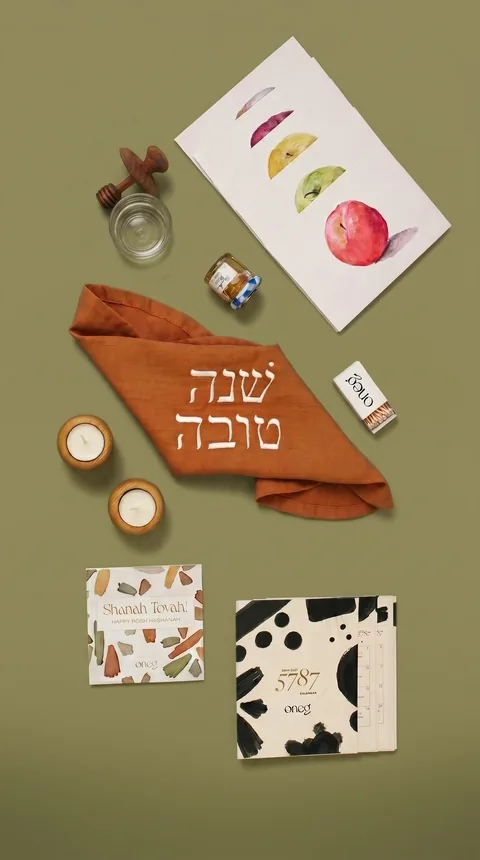
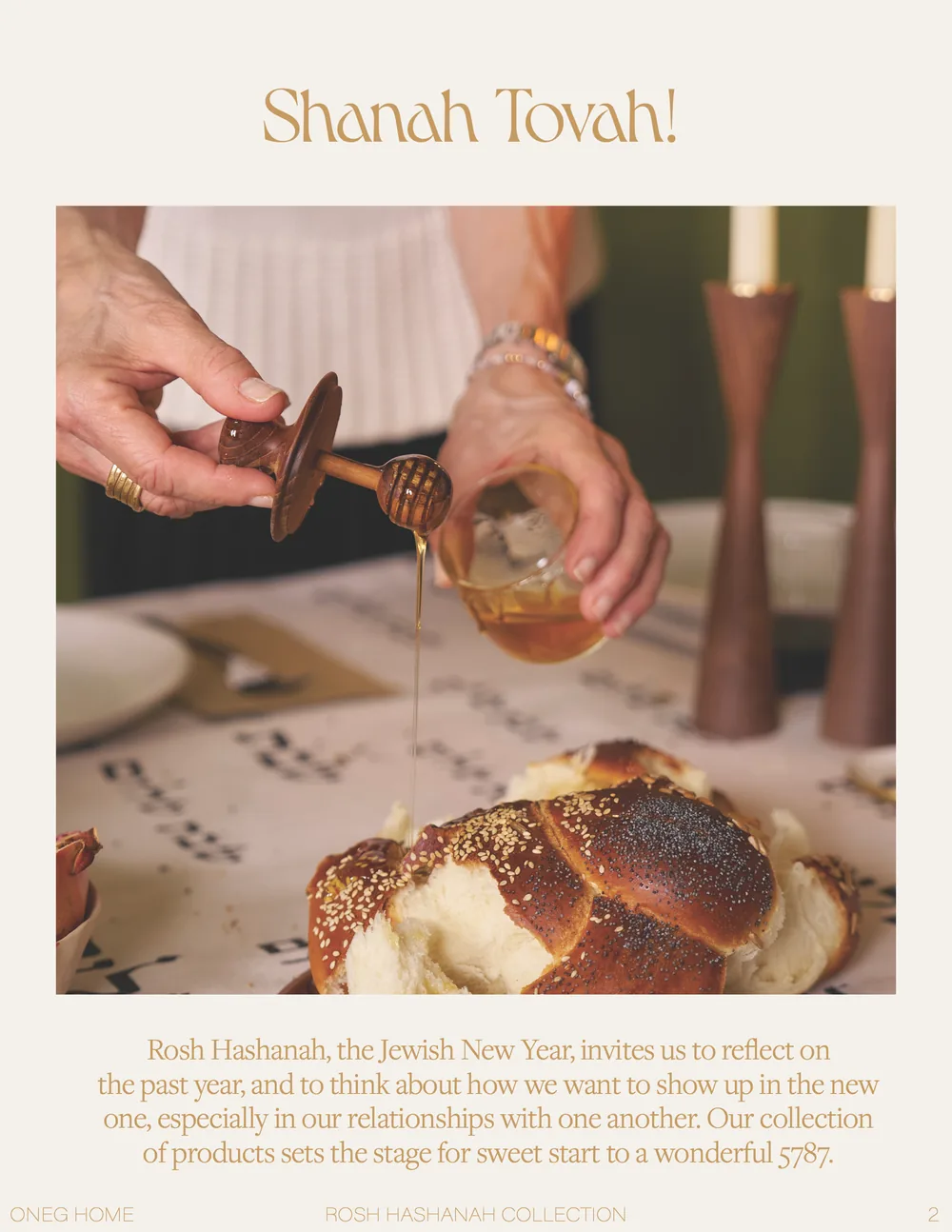
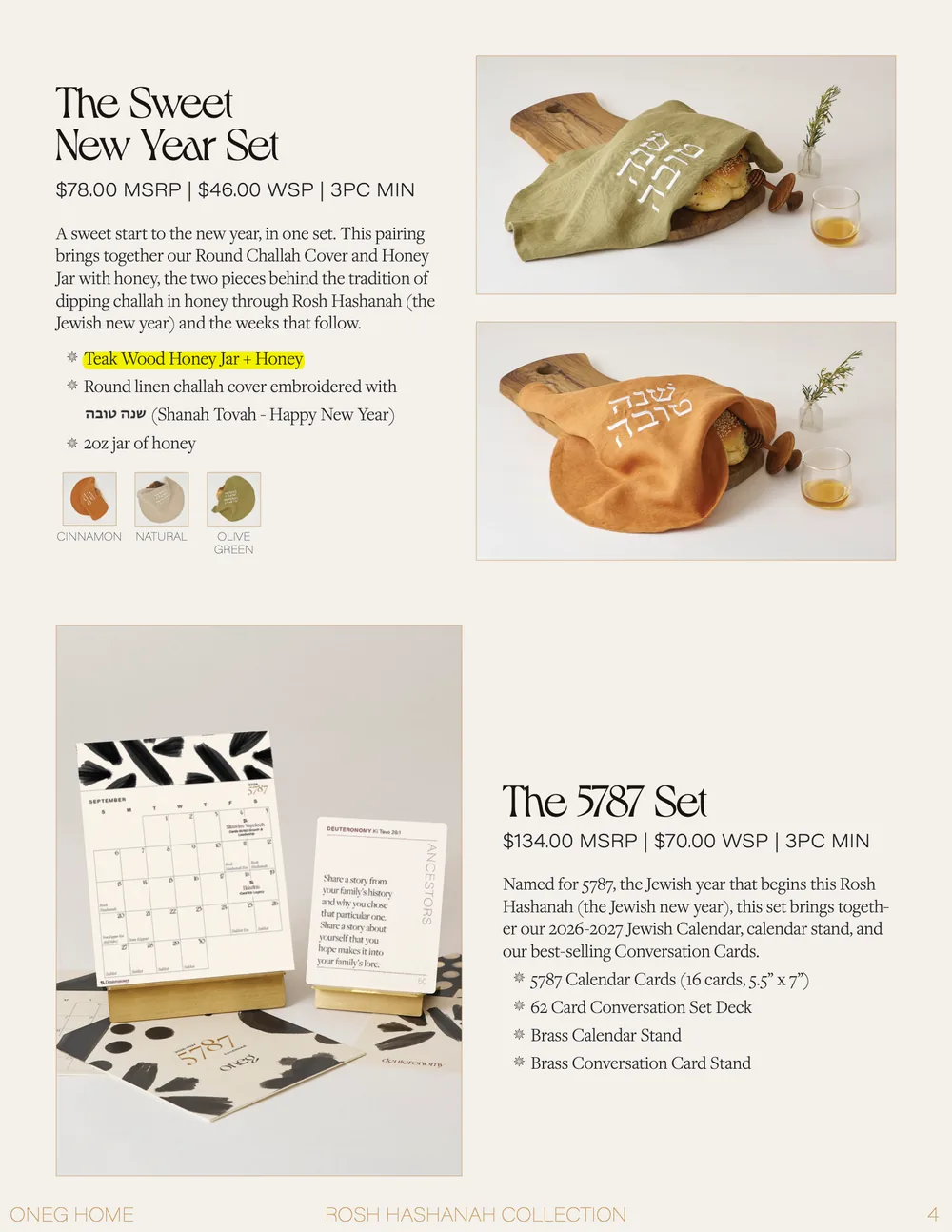
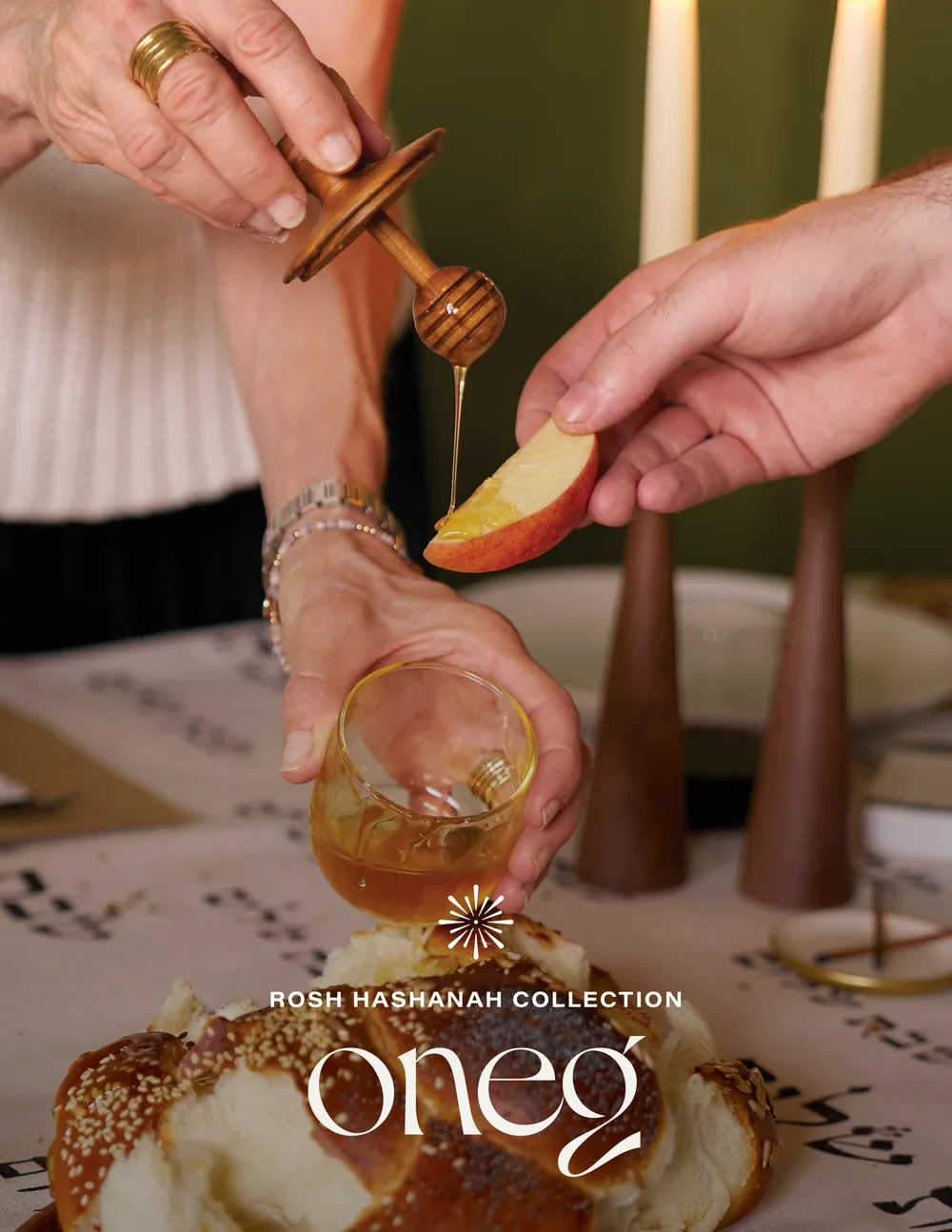
The previous year, Oneg’s honey jars sold well at Rosh Hashanah without any dedicated campaign, and Oneg’s mission is to make ritual experience meaningful, accessible, and elevated. We decided to design a collection of objects that actively guided customers through a beautiful, prepared Jewish new year.
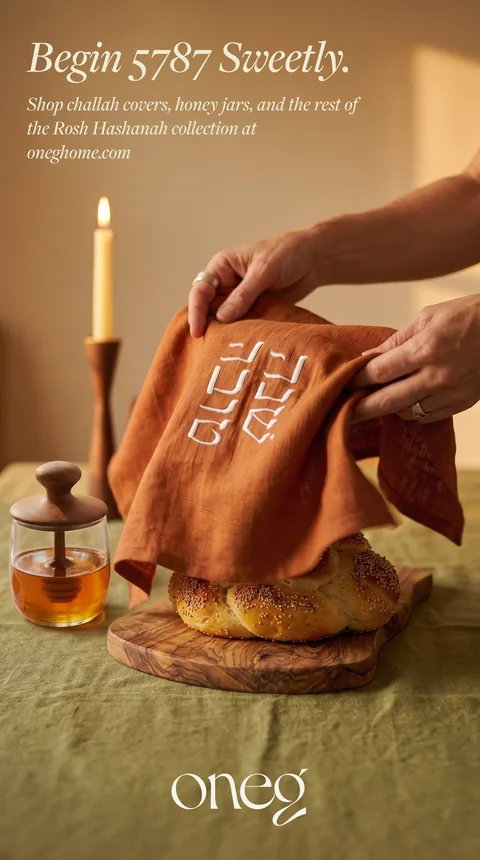
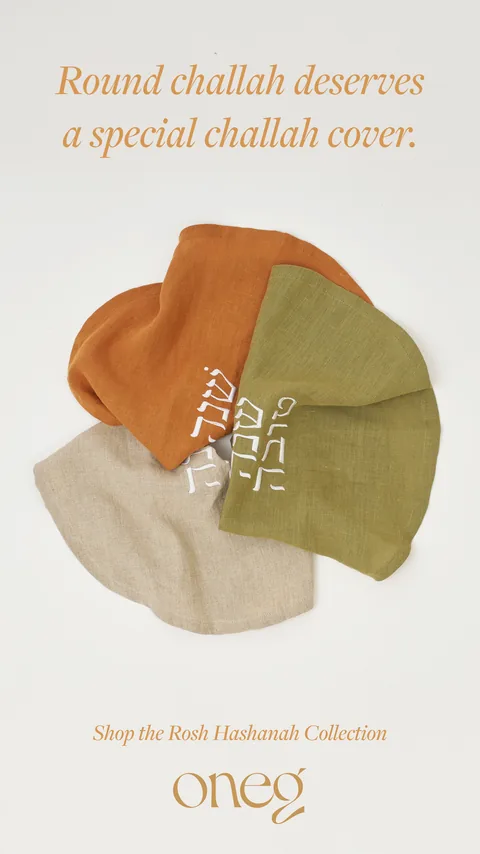
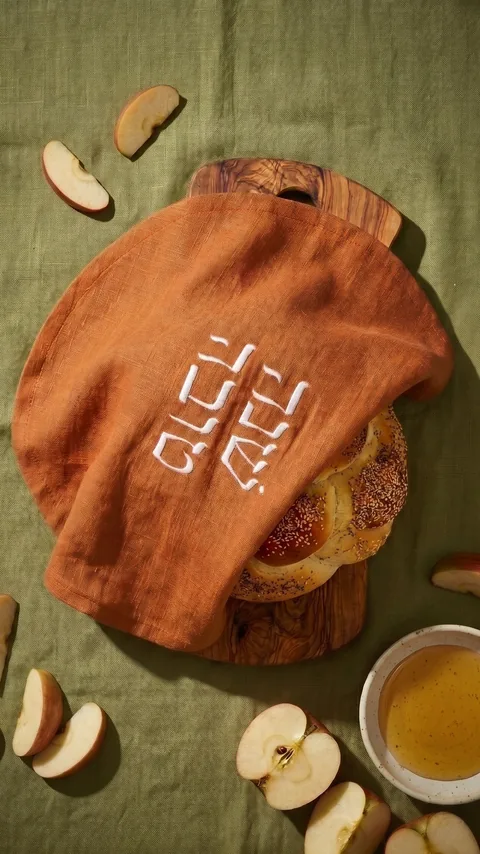
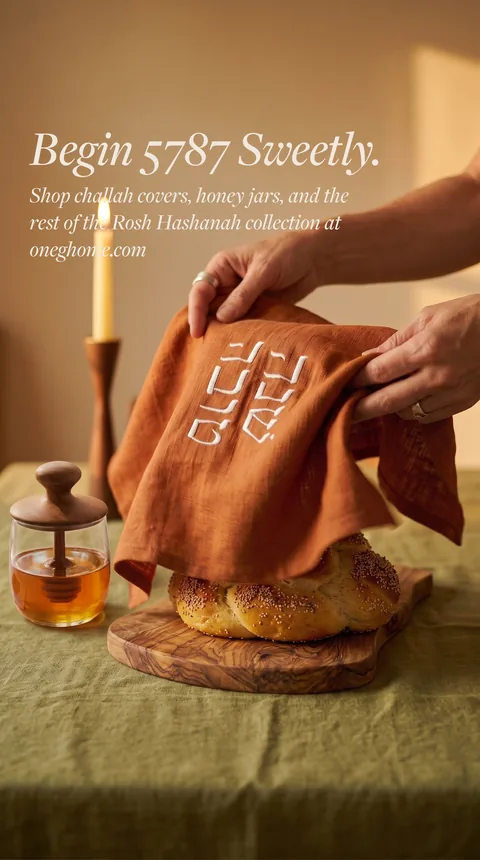
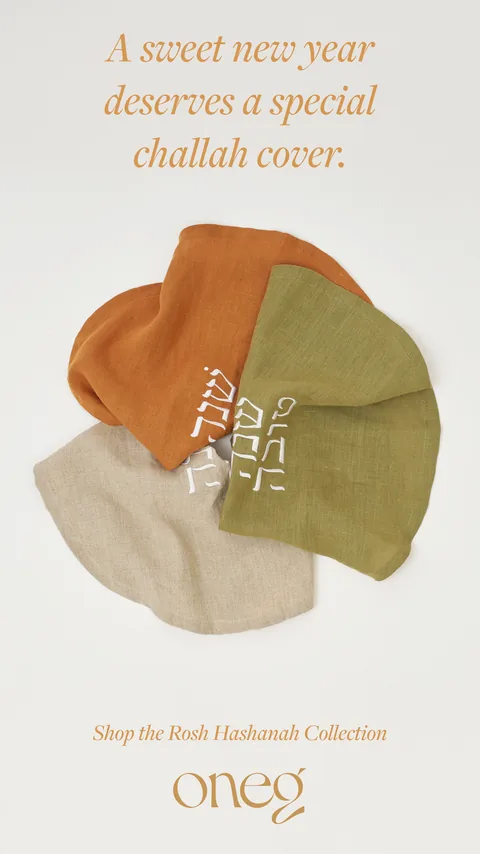
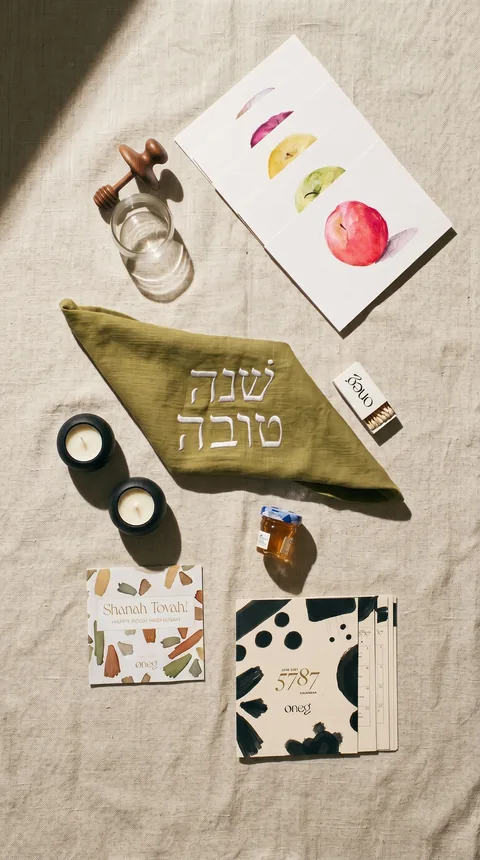
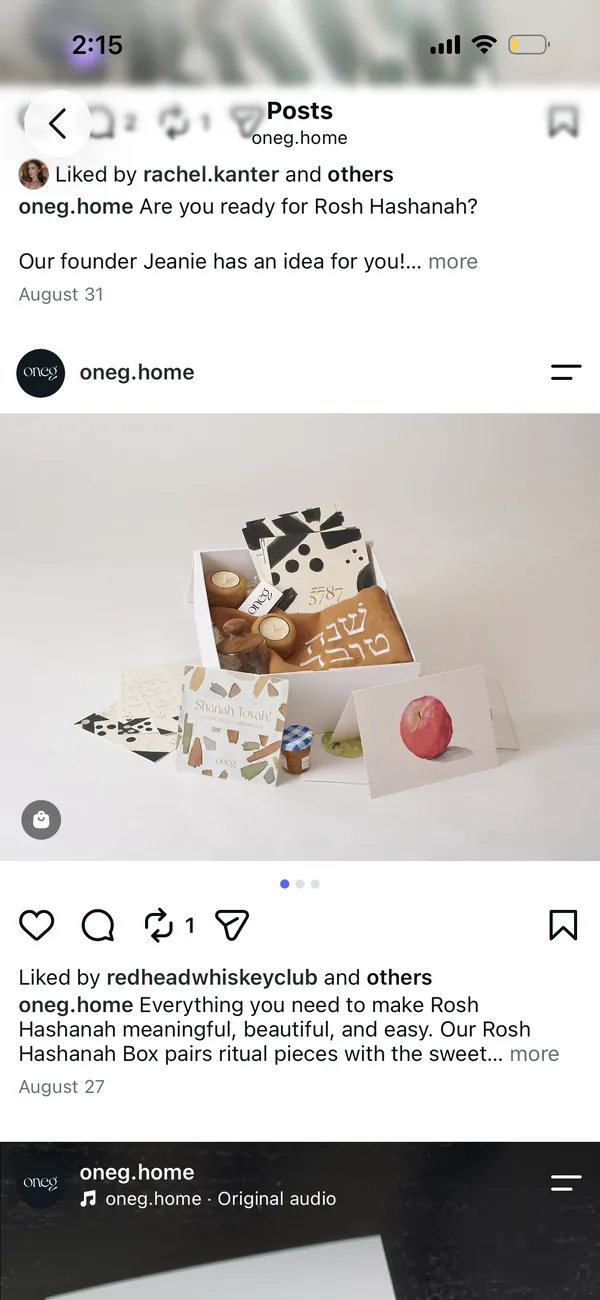
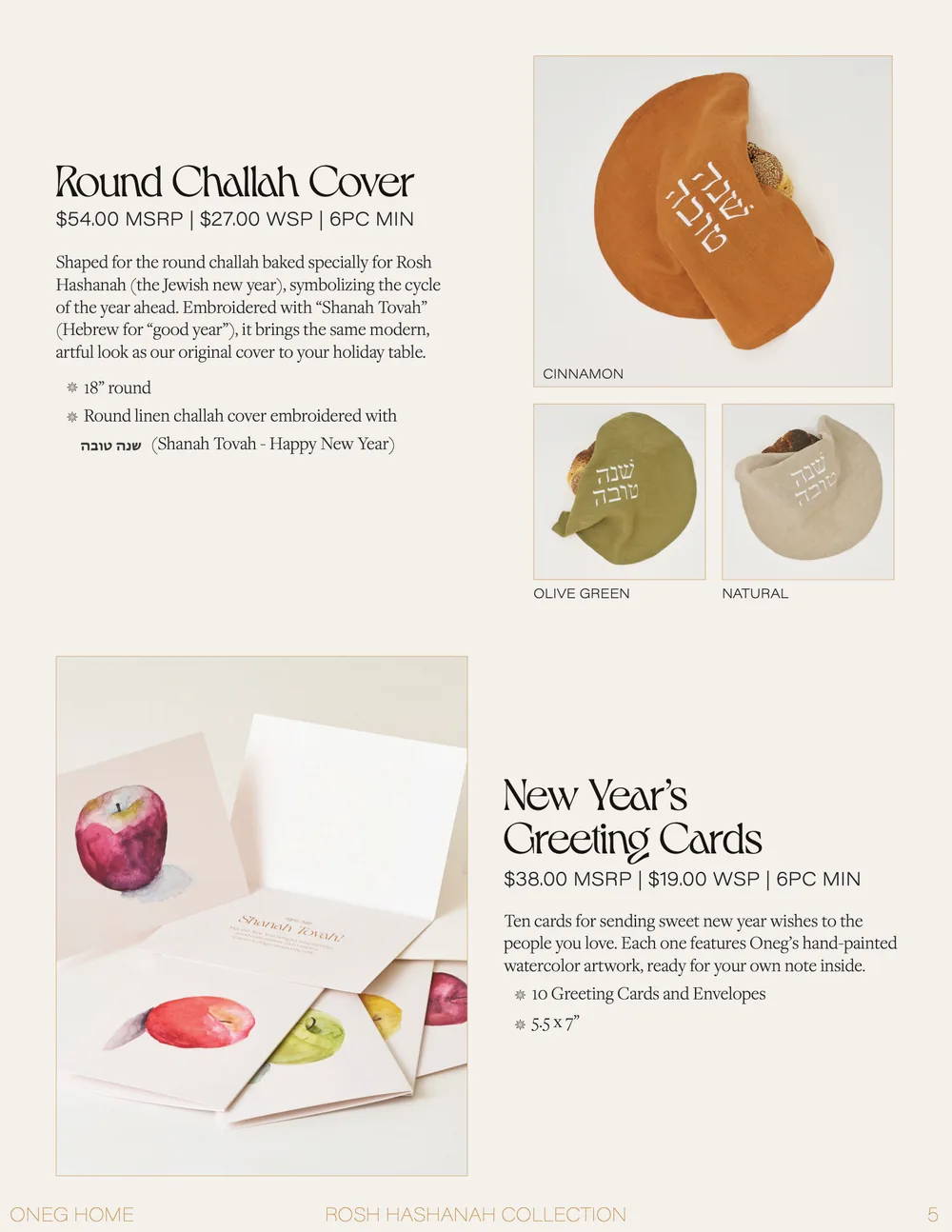
- Round challah cover, embroidered with ‘Shanah Tovah’ in Hebrew, three linen colors.
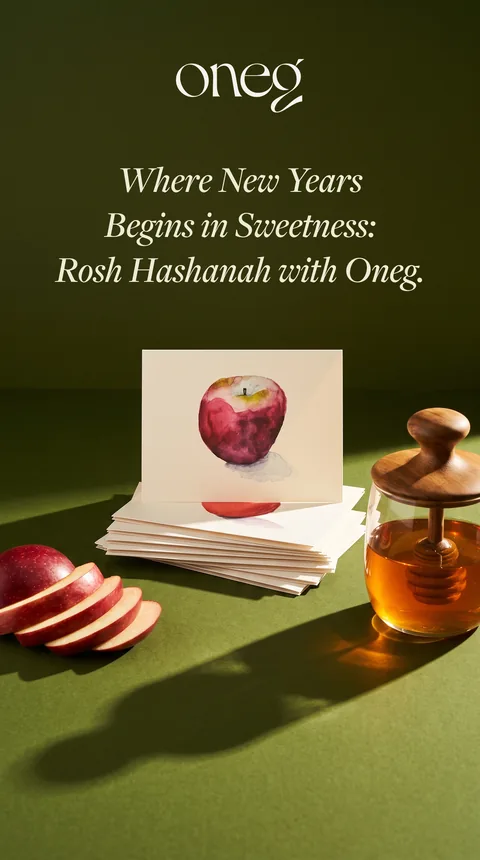
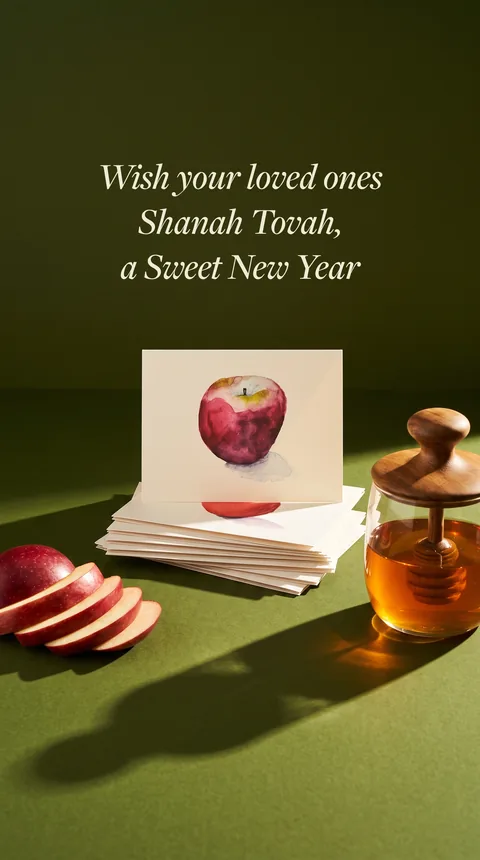
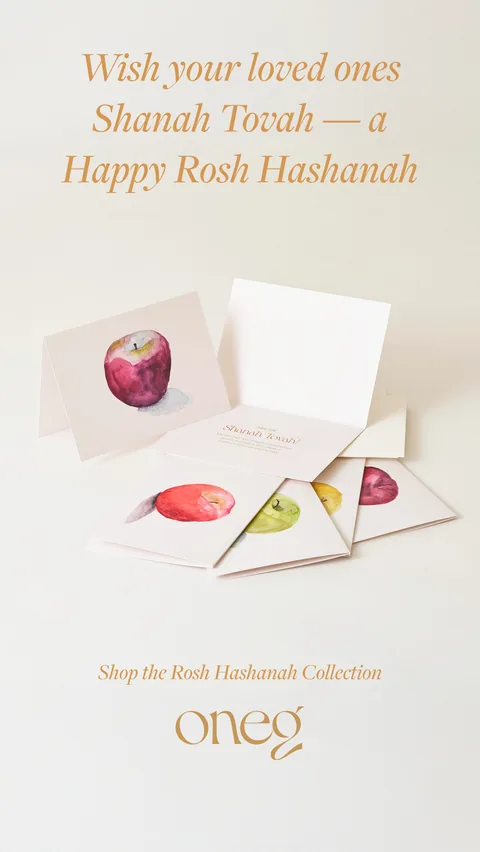
- New Year’s greeting cards, a set of ten with apples I painted in watercolor, and warm wishes to send to friends and loved ones.
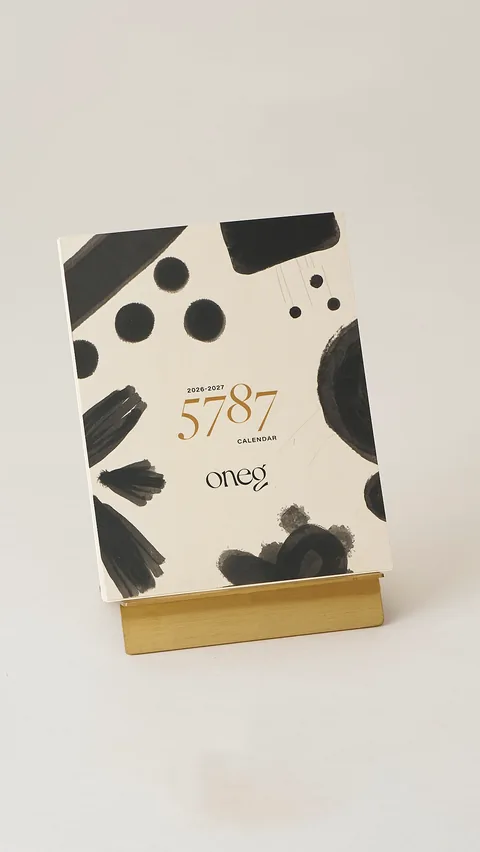
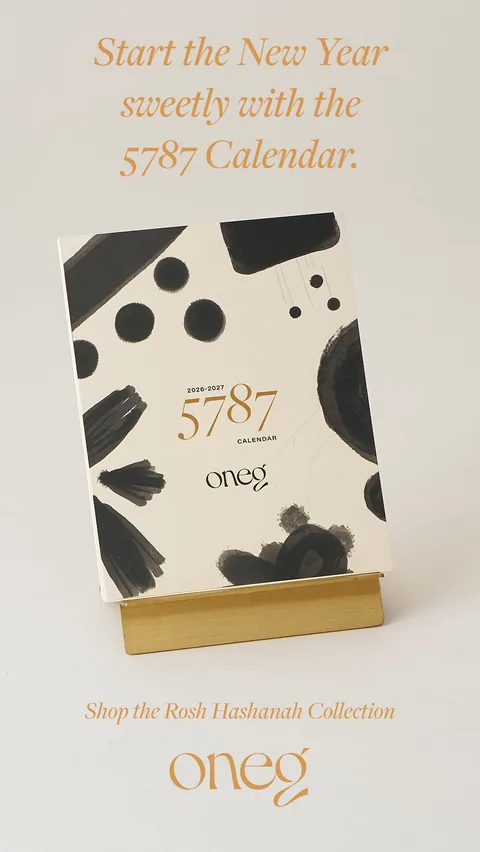
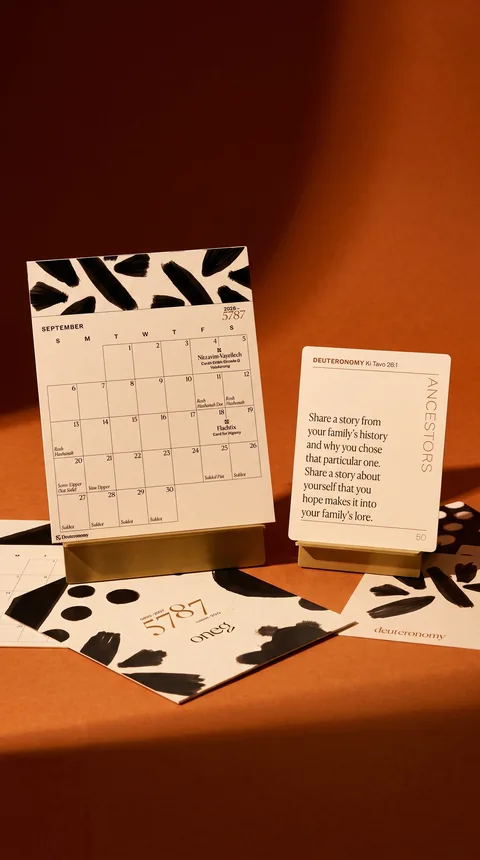
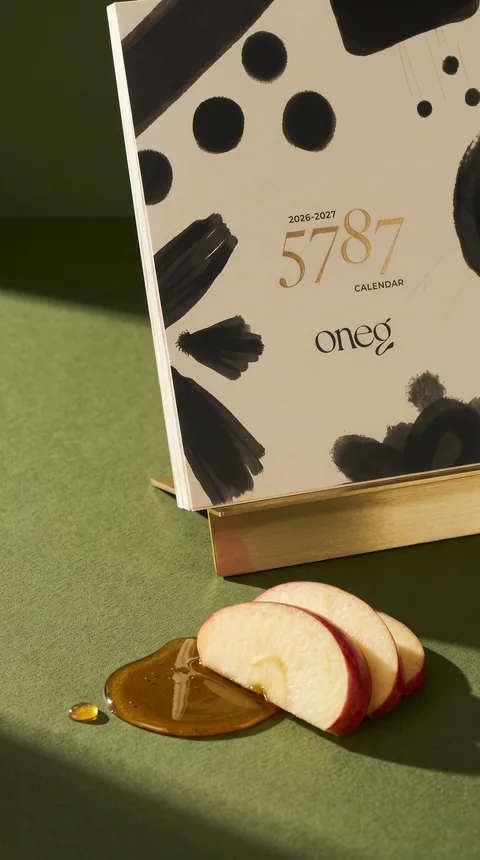
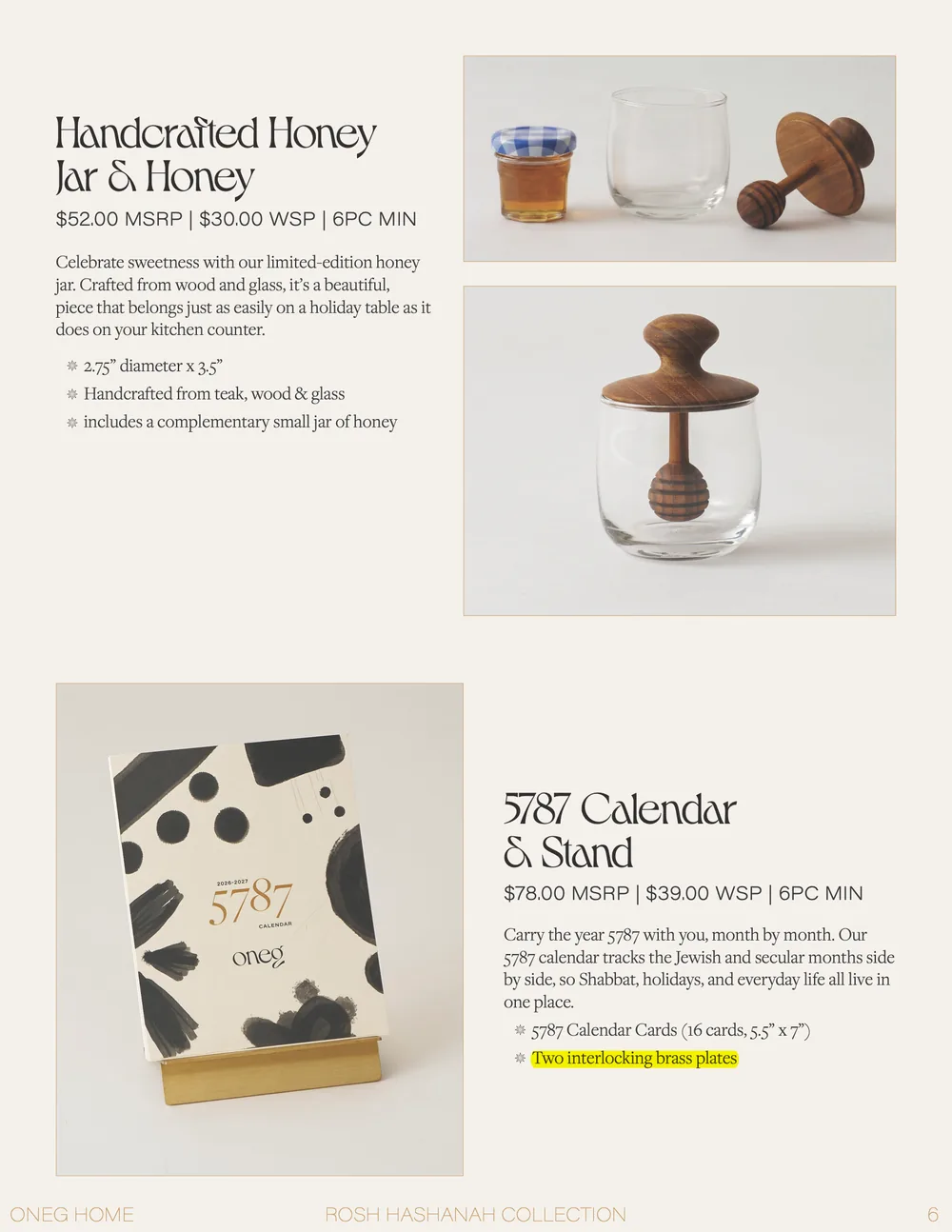
- 5787 calendar on a brass stand, designed to help customers use the best-selling Shabbat conversation cards each week.
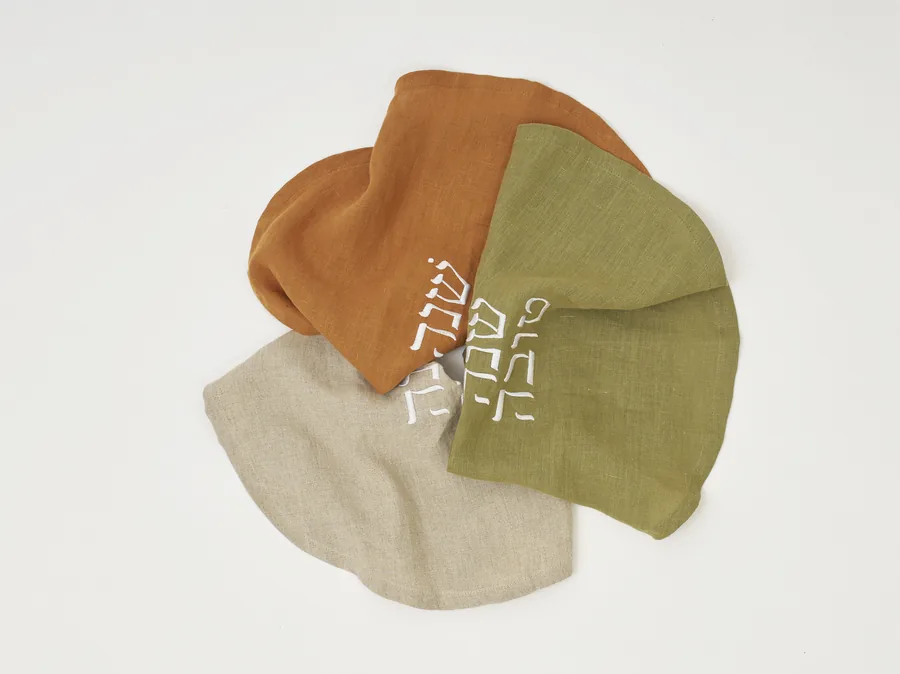 Round challah cover
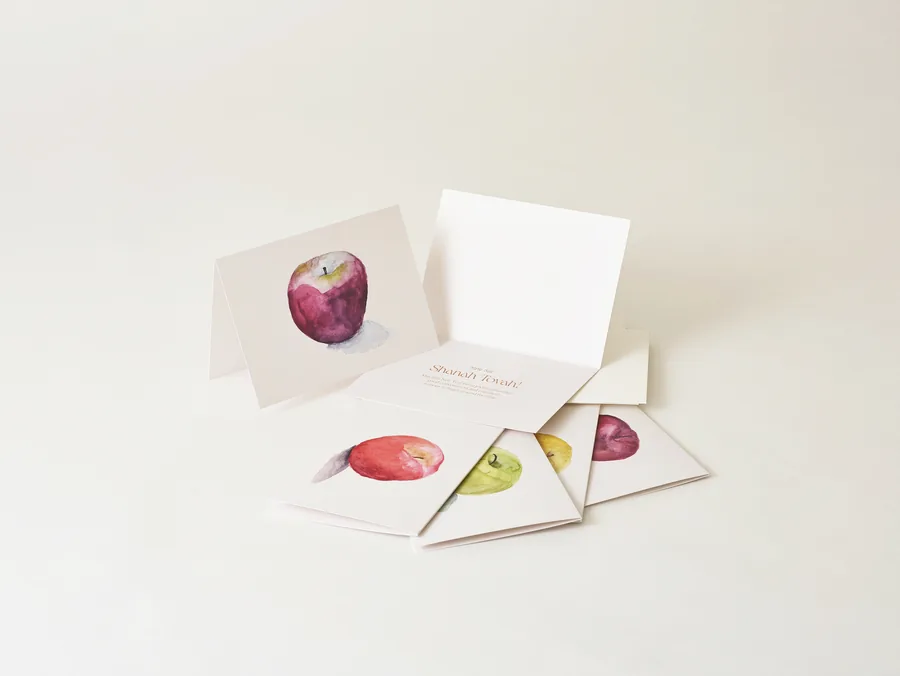 Greeting cards
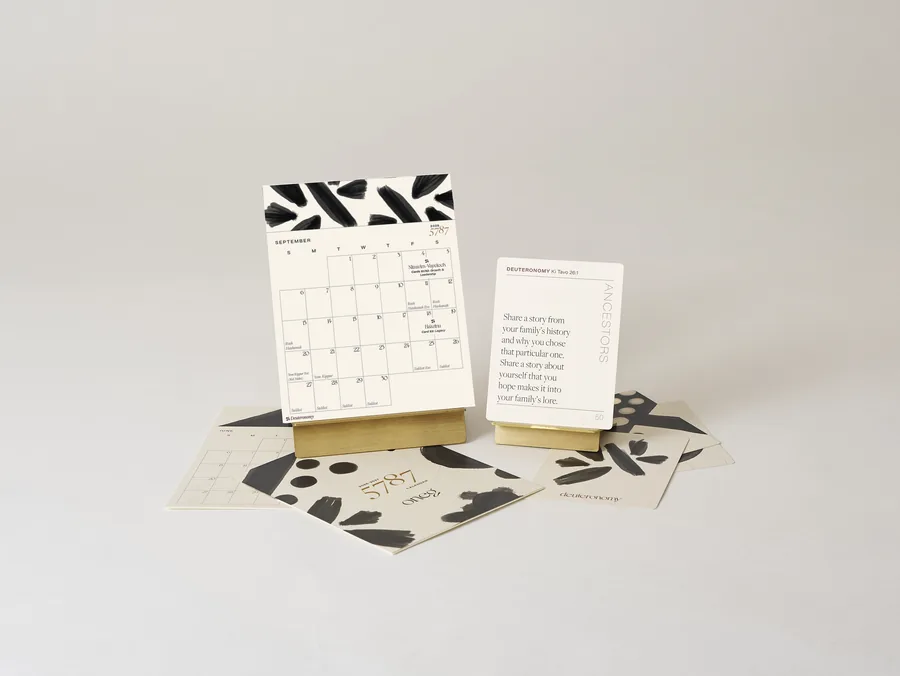 5787 calendar
In retrospect, I’d rework the calendar. Oneg’s earlier desktop calendar didn’t sell well: the stand is heavy and expensive, and a desk calendar takes up space without doing much. I proposed a new format, but the previous design ended up being what we went with. I also skipped testing the format with customers before production, which would have settled it. Moving fast on intuition was a deliberate trade at our size, and on this product it was the wrong one.
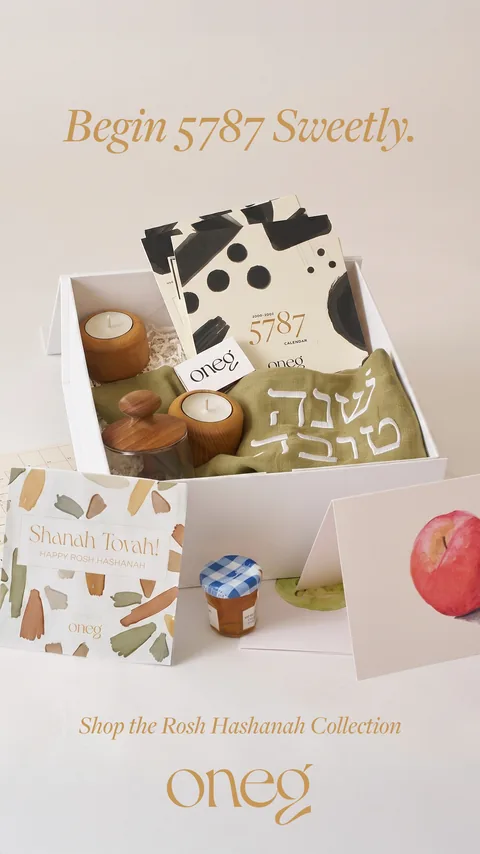
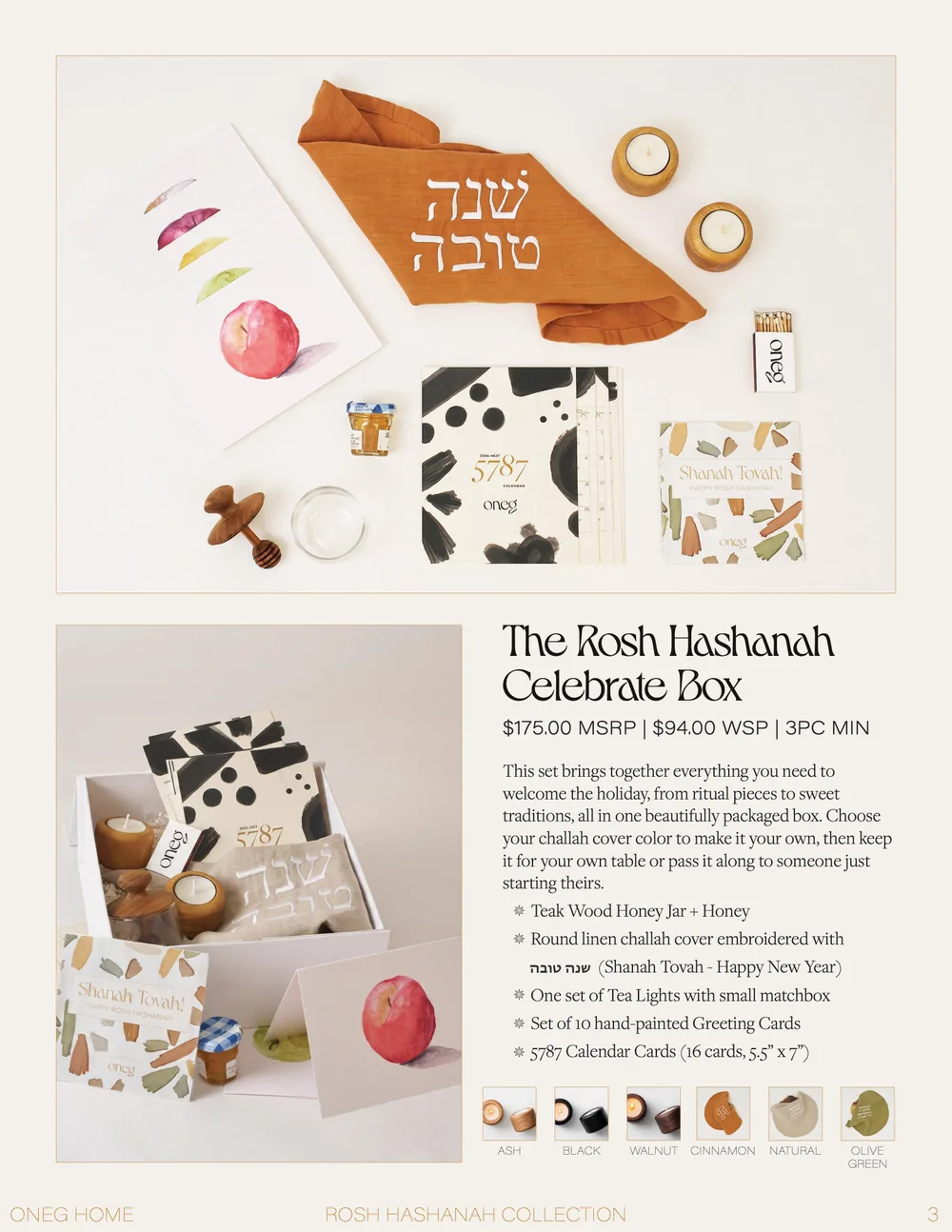
Also, every product sold as a part of the Rosh Hashanah Celebrate Box - a play to promote a higher AOV and bundled discounting.
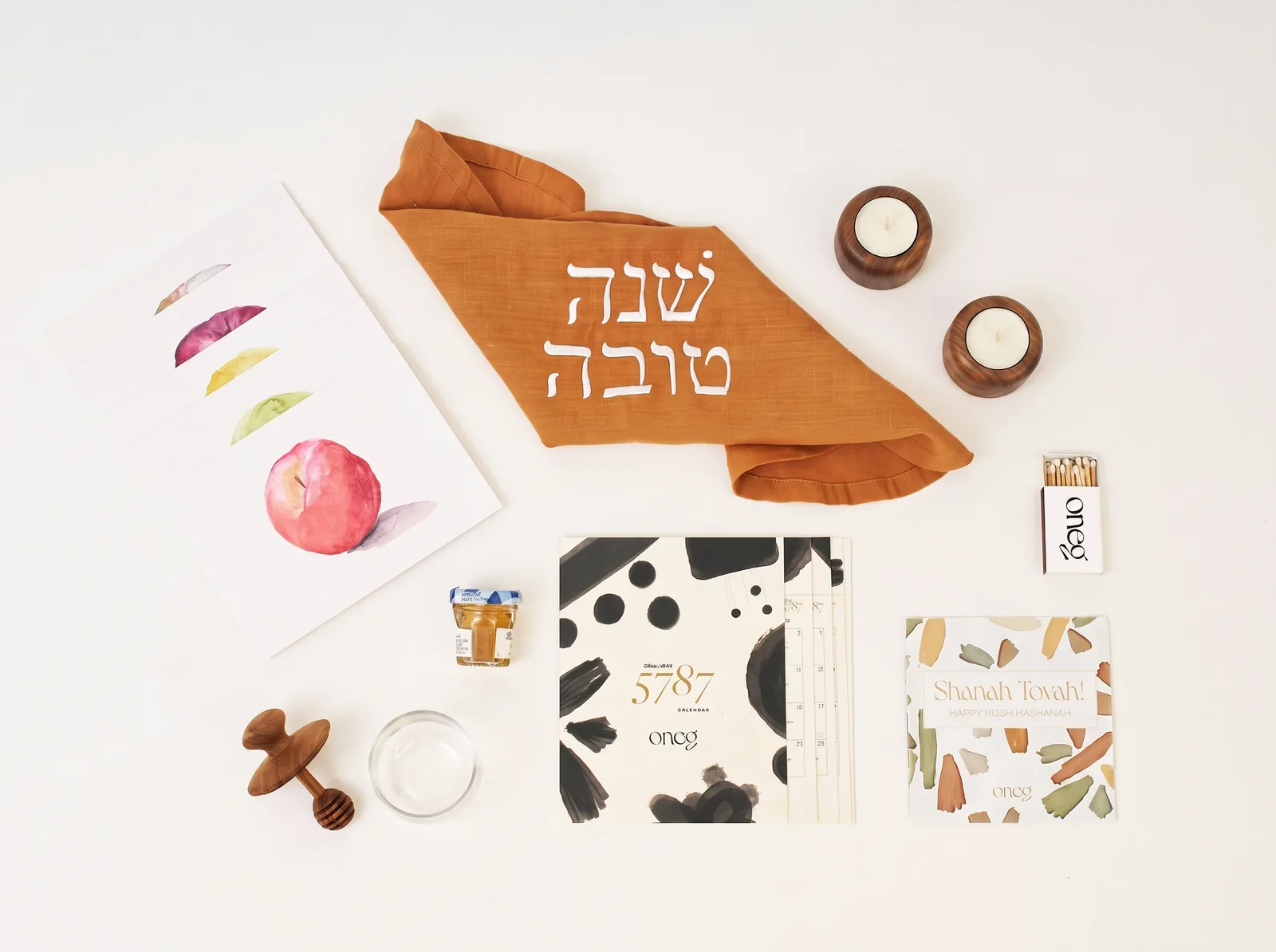
- Pricing. Single items ran from $38 to $56 and the box launched at $175. The greeting cards were priced as an easy add-on to a challah cover order, and a set paired the calendar with our best-selling conversation cards. Free shipping started at $150.
- Inventory. I sized the order for about five times the previous year’s holiday sales, working from unit pricing, overseas shipping, planned ad spend, email projections, and cash on hand. The CEO made the final call on my recommendation.
- Risk. Greeting Cards and Calendars are timely sales, with the other items storeable for a year to sell next Rosh Hashanah.
Creative
Meta advertising does well by testing hundreds of different ad creatives and allocating spend towards the most successful creative. Our creative team was quite small, so leveraging AI workflows became imperative.
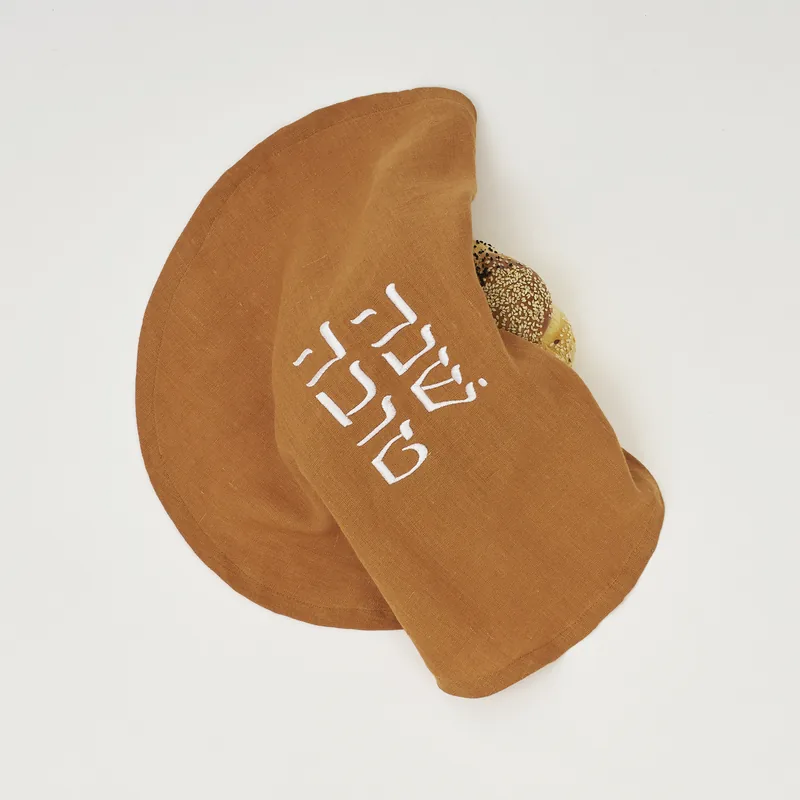
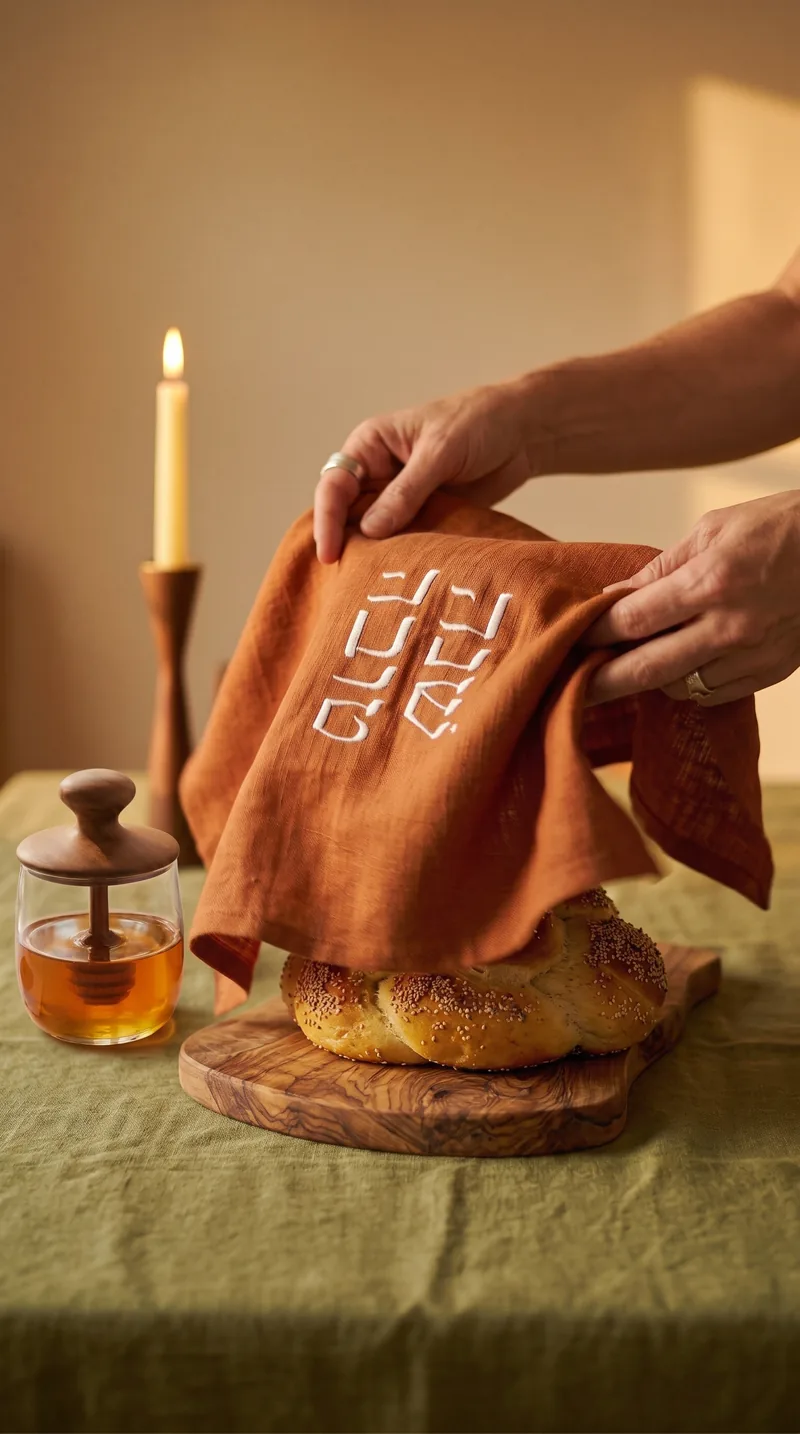
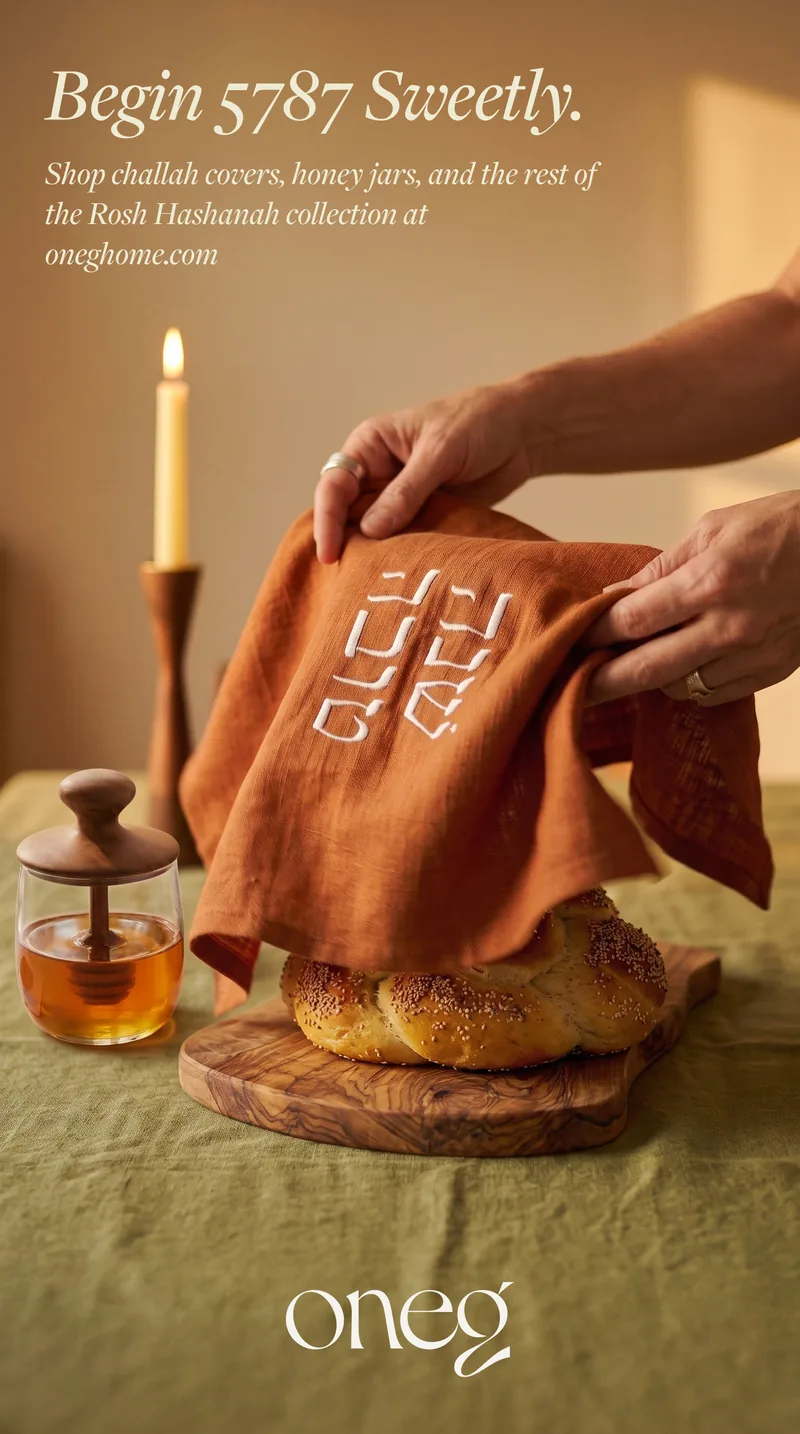
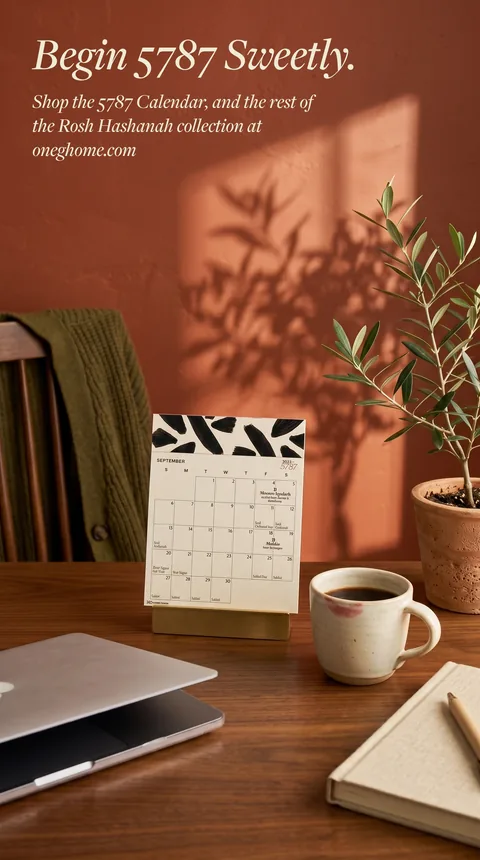
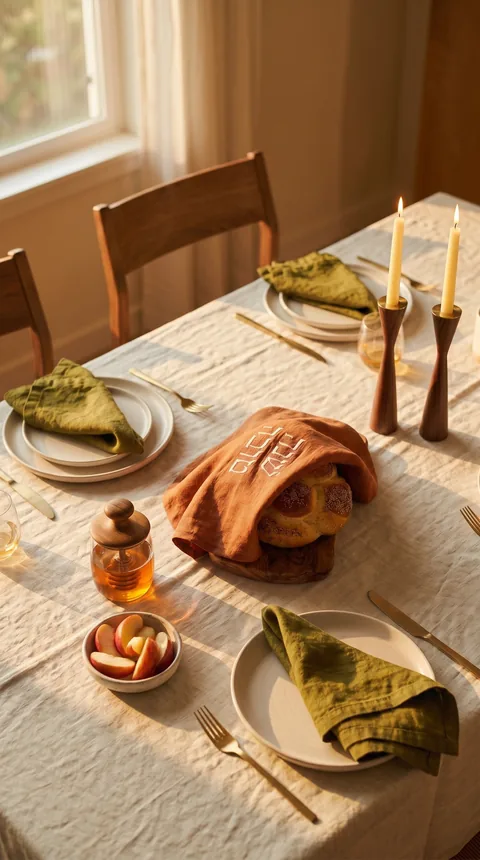
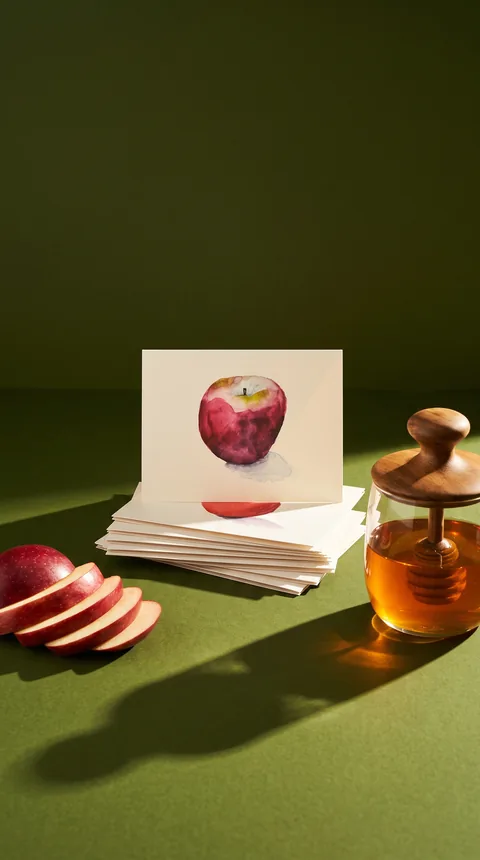
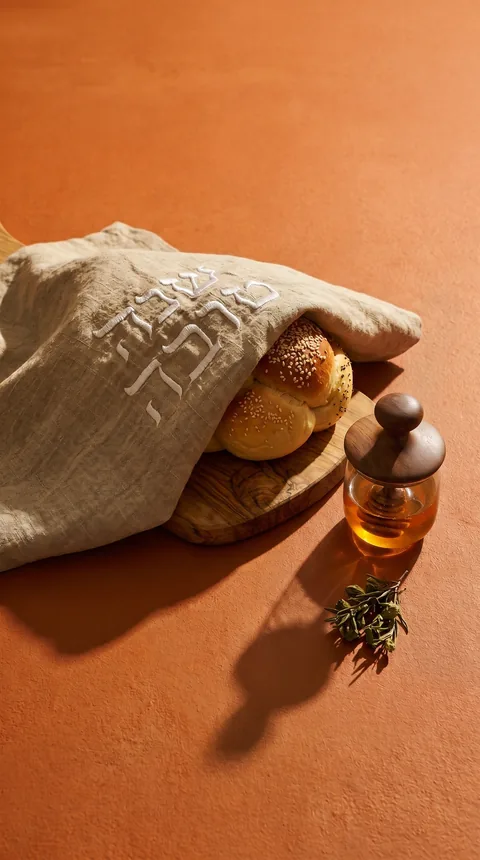
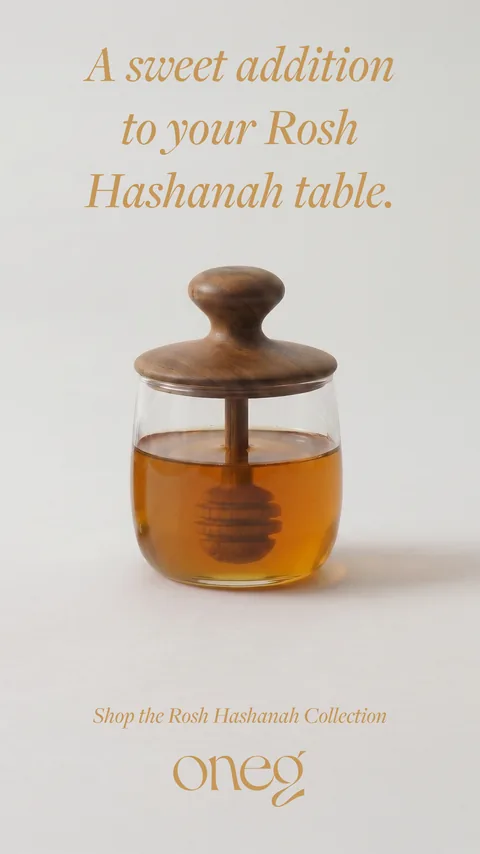
We booked one studio day for clean product photography, and those photos became the base for everything else. I believe strongly in the importance of well-made foundations, particularly when using AI assisted creative workflows. From them I generated lifestyle scenes in Google Flow, finished them in Photoshop and Premiere, and filled gaps with phone footage.
 1. Studio photo
 2. Generated scene
 3. Finished ad
Generating an image took minutes. Directing, critiquing, and rejecting images at the pace of a launch took most of the work, and it depended on strong foundation photos and a clear plan before anything was generated.




Launch
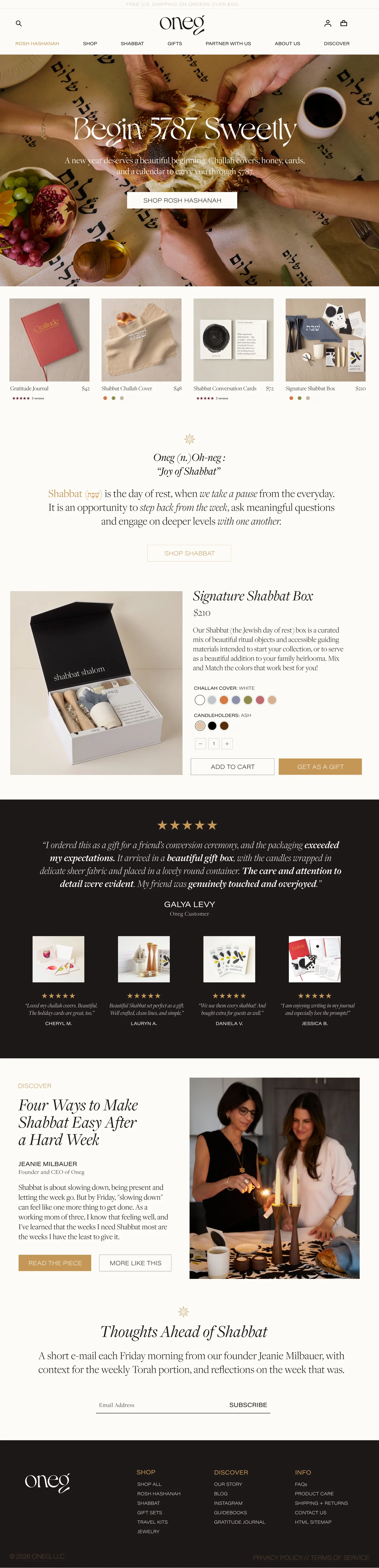
Website. I moved the homepage hero to the holiday, added a Rosh Hashanah page under Shop All, and offered an email signup discount scoped to that page. All of it was built in Shopify with Claude Code.
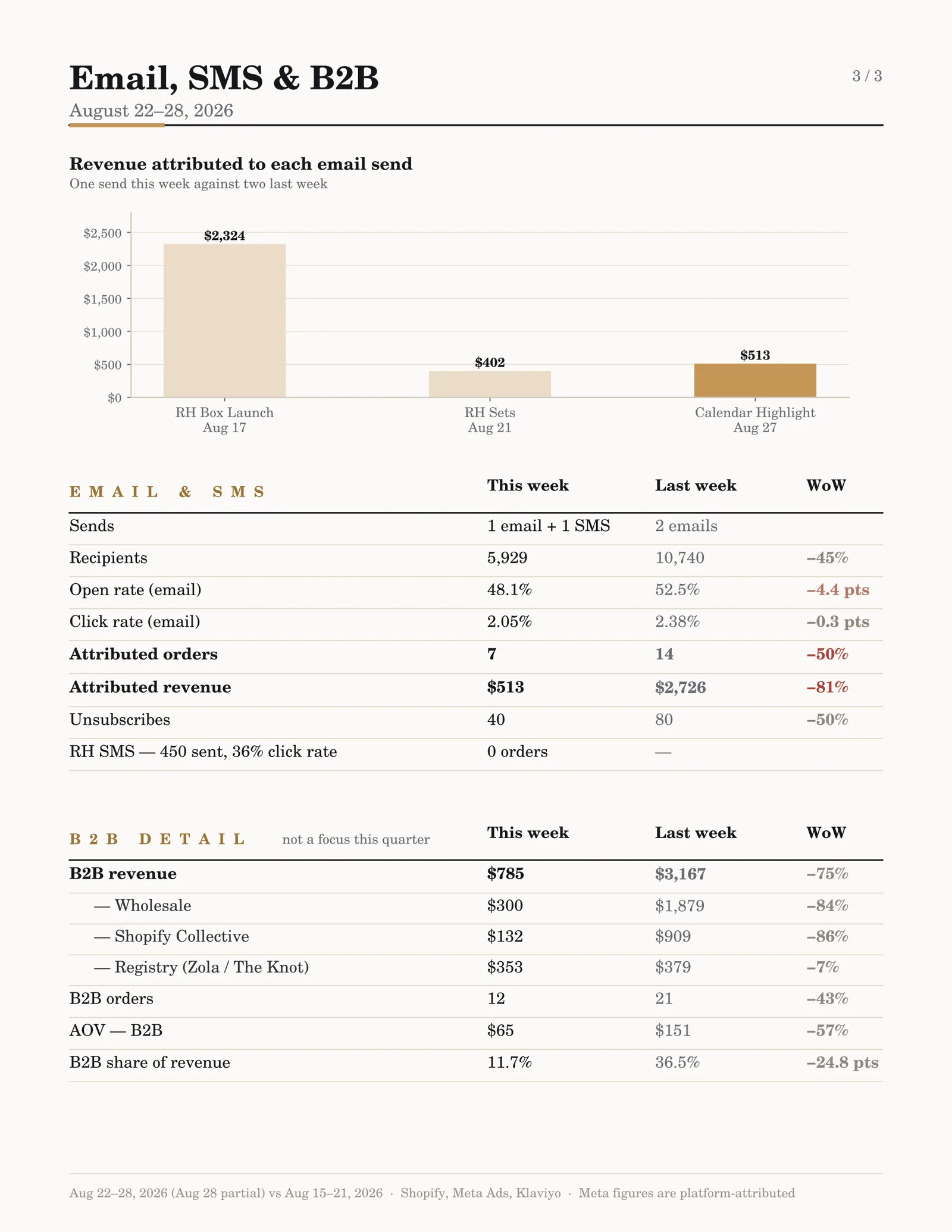
Email. Klaviyo, on two tracks: five sends to the full list, alternating founder stories and direct selling, and three product spotlights sent only to people who opened the launch email. The launch email alone drove $2,324 in attributed revenue, with open rates around 50 percent.
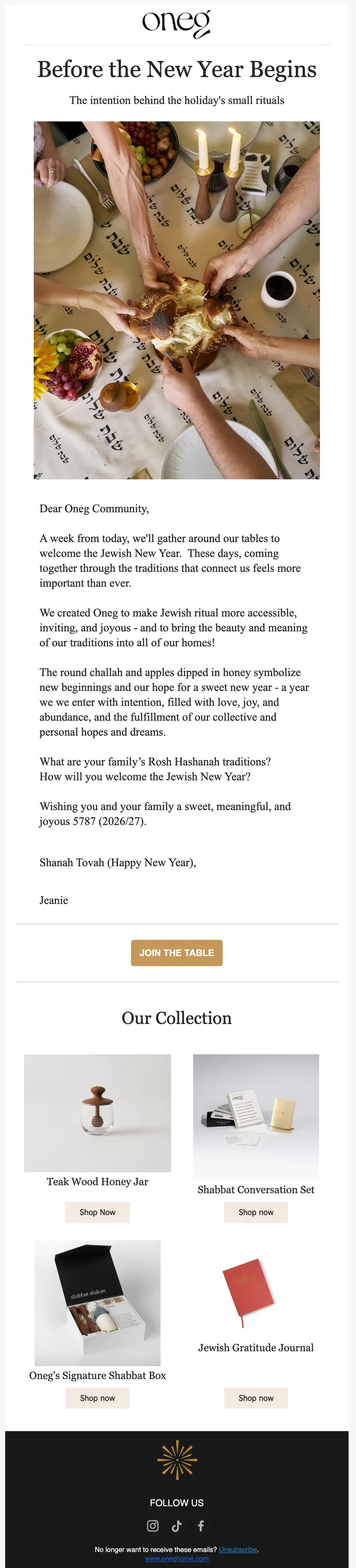 Aug 10Founder letterHoney as the anchor of the season, with no hard sell.
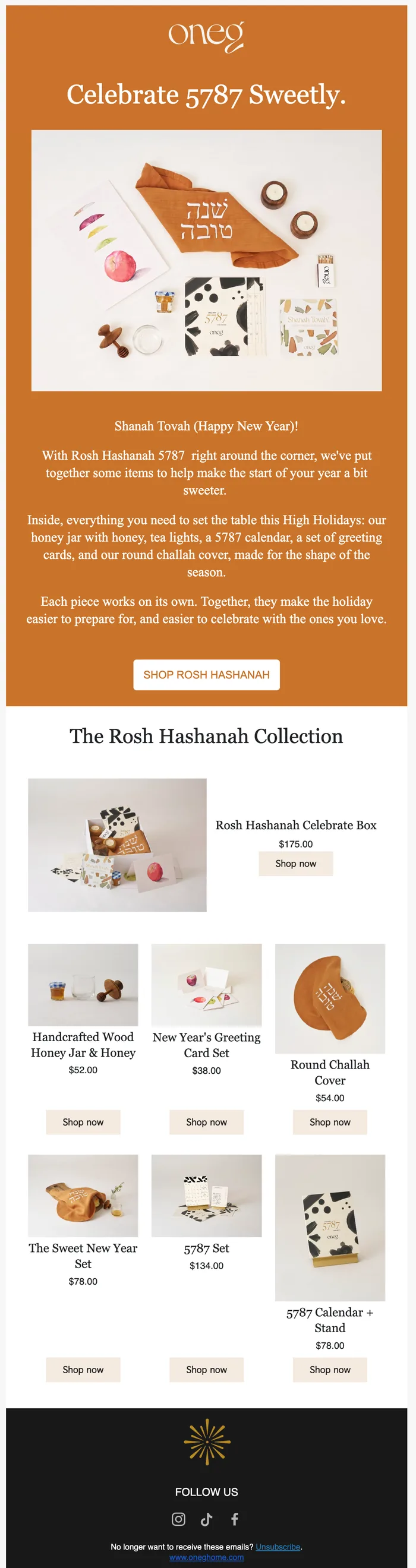 Aug 17Box launchThe full reveal of the Celebrate Box and everything inside.
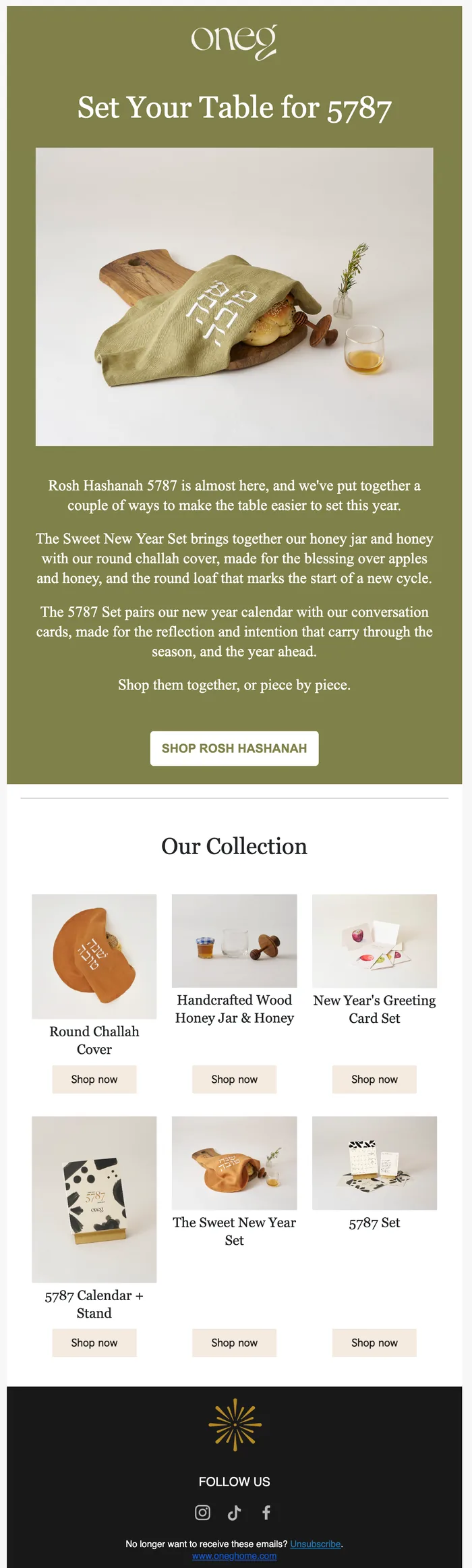 Aug 21Set your tableThe sets, framed around hosting the holiday dinner.
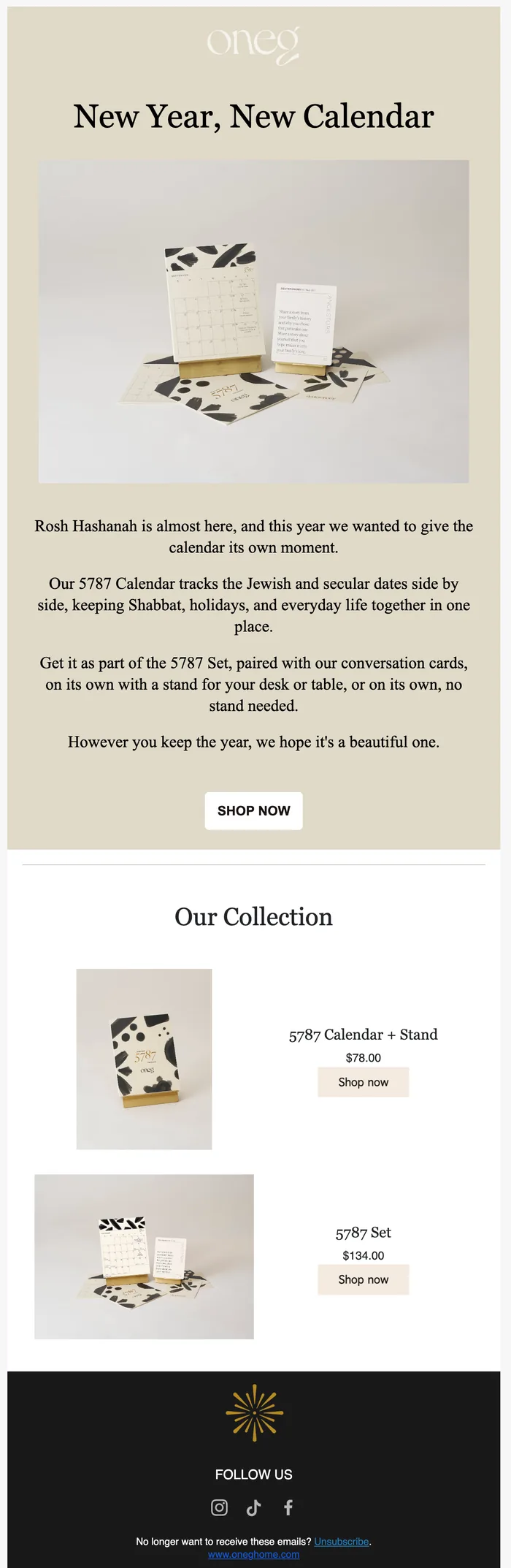 Aug 27Calendar highlightA spotlight for people who opened the launch email.
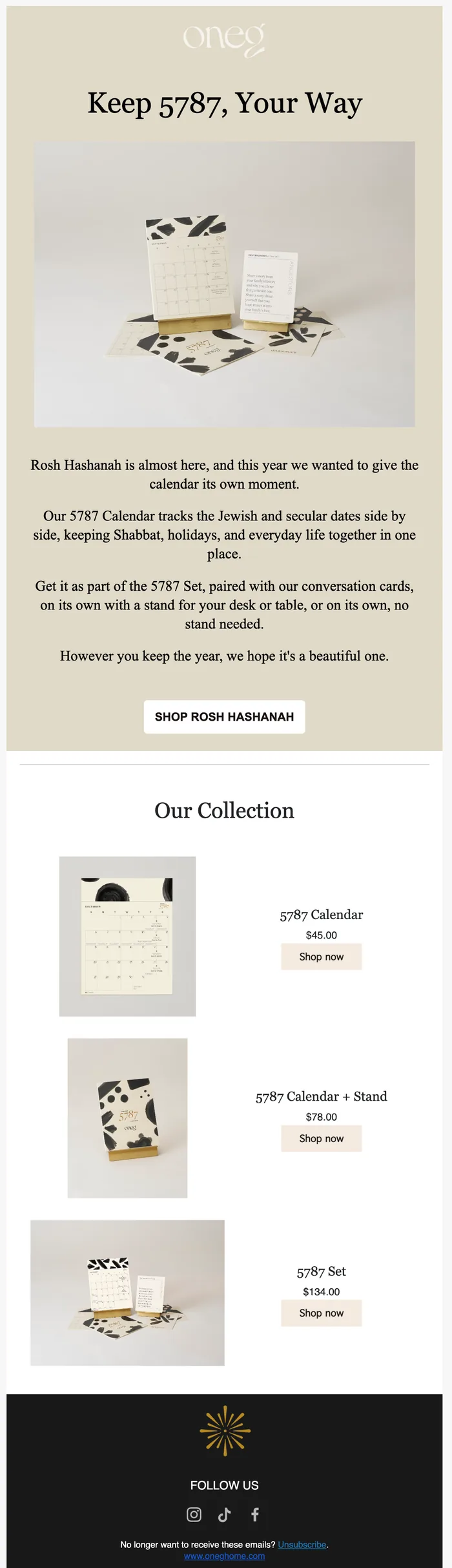 Sep 2Calendar spotlightThe calendar as a way to carry the holiday through the year.
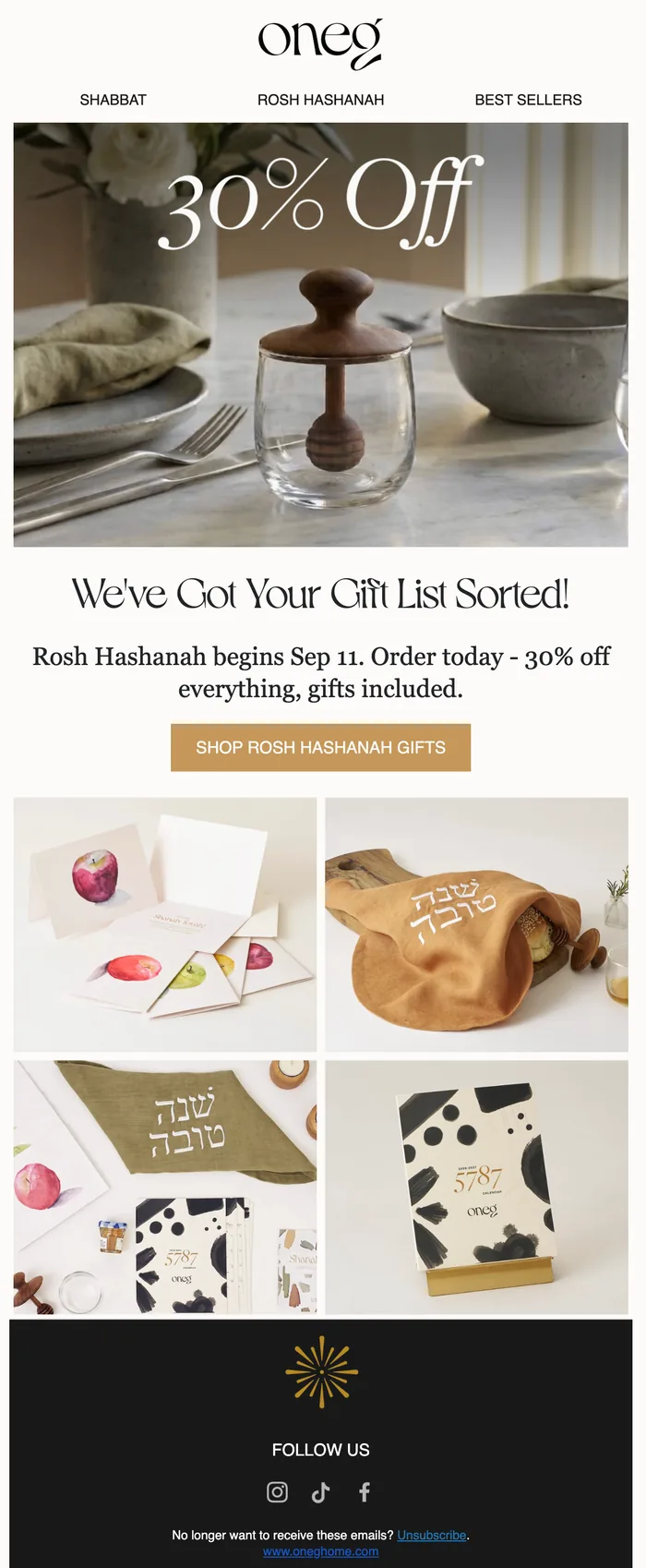 Sep 4Weekend saleA weekend sale, one week before the holiday.
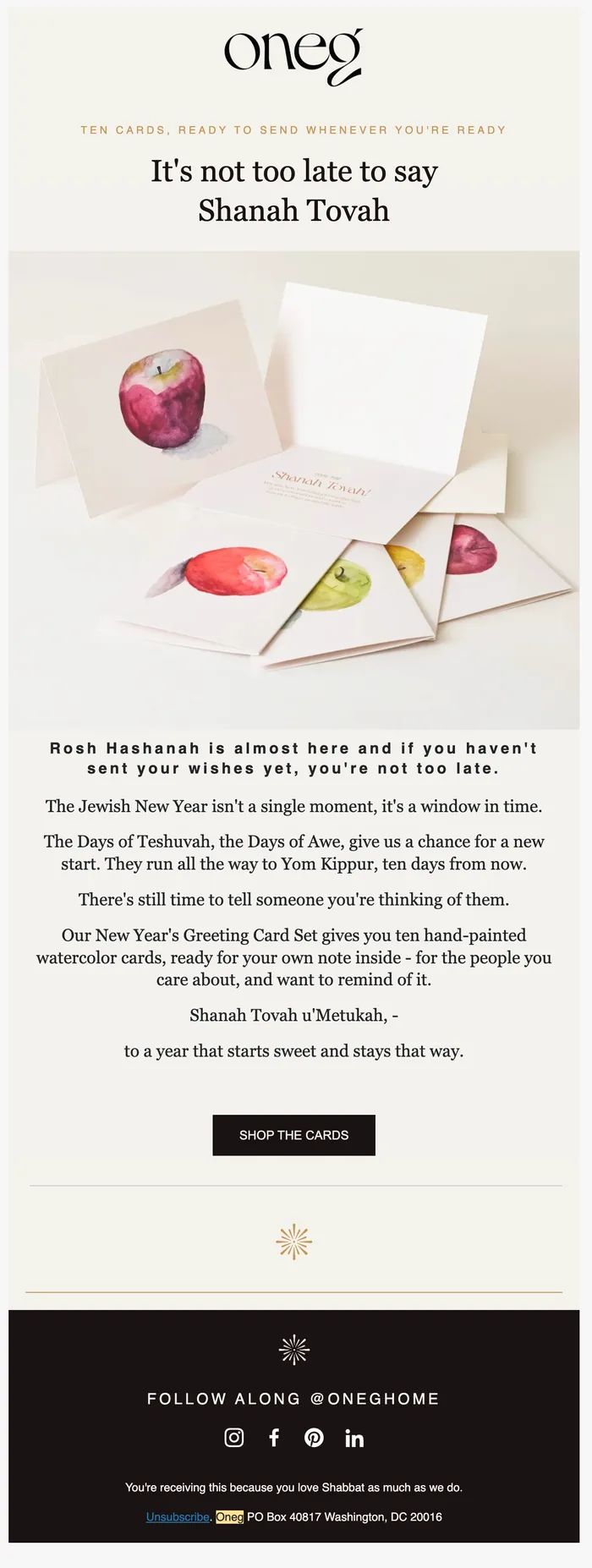 Sep 10Last callGreeting cards for anyone who hadn't sent their wishes yet.
1 / 7
Sep 10Last callGreeting cards for anyone who hadn't sent their wishes yet.
1 / 7
Social. Organic ran on a six-week calendar of product videos, founder videos, and lifestyle shoots. Three creators made unboxing reels with the box, including @thegoldenapricots and @theholyhostess.
 Carousel
Reel by @thegoldenapricots
Carousel
Reel by @thegoldenapricots
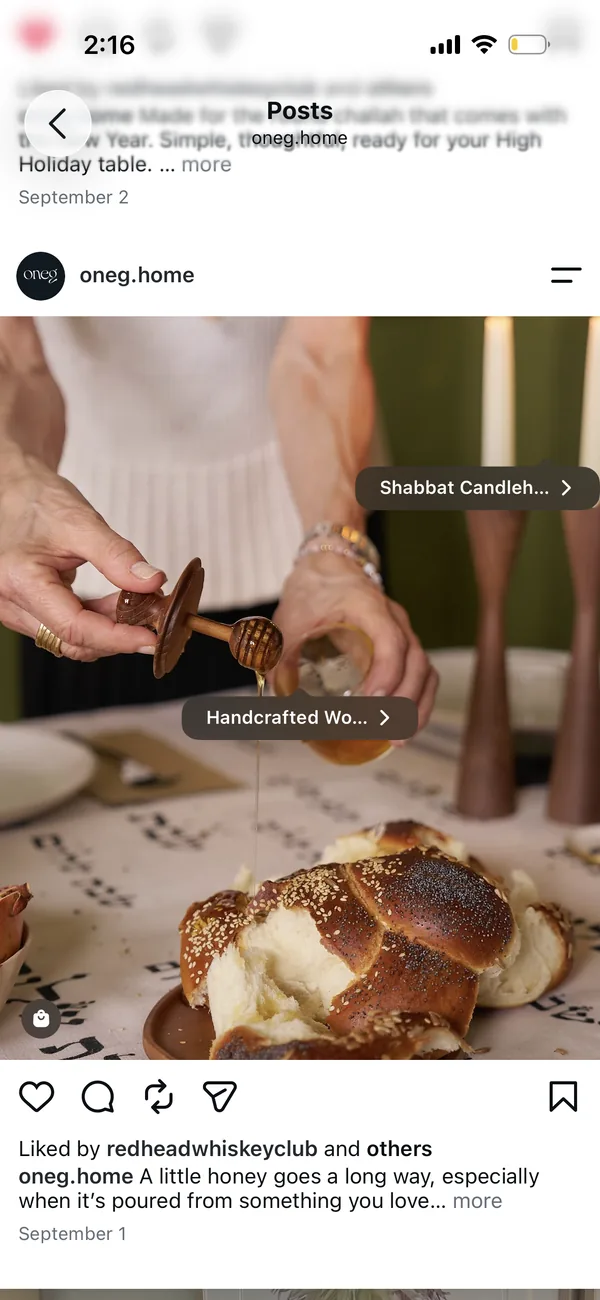 Post
Reel by @theholyhostess
Post
Reel by @theholyhostess
List growth. Giveaways with Ora Magazine and Modern Tribe added more than 1,000 subscribers. Both audiences already shopped Judaica, and the first send to the combined list had the best open rate and the highest single-email revenue in company history.
SMS. Oneg’s first SMS reached 450 people and earned a 36% click rate.
Wholesale
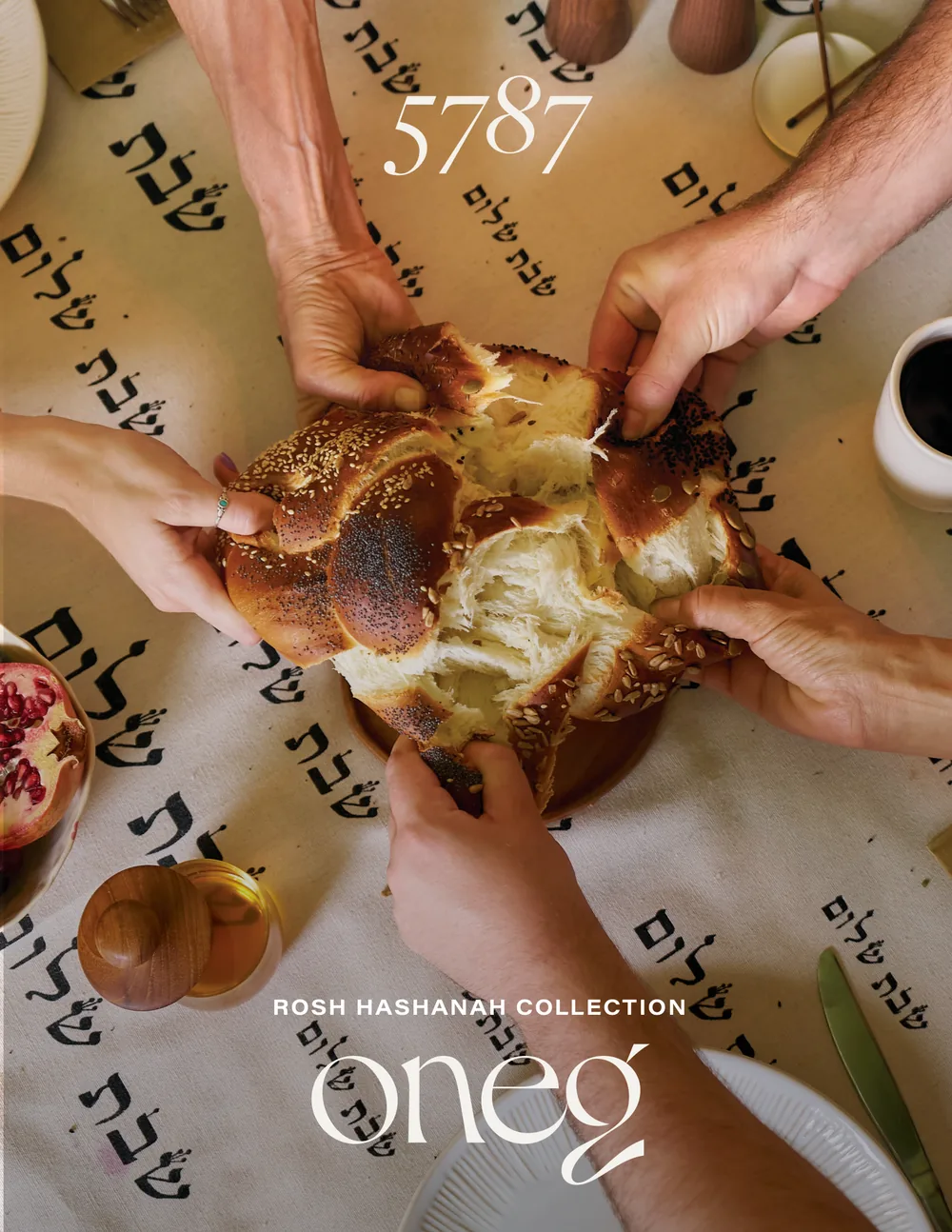
I designed a wholesale catalog for retailers and Jewish organizations, and it went out four weeks before the holiday. Most retailers declined. They buy about eight weeks out and set fall budgets earlier than that.
My strategy had placed wholesale in a later phase, since wholesale pricing at half of retail leaves almost no margin on the box. Sending it early was a call I argued against. Oneg was used to Shabbat, which comes every week, and was still learning to plan around a selling season with a fixed date.
B2B still brought in about $20K during the campaign, mostly on core products, through outbound email and a sales pipeline I built in Attio.
 1 / 7
1 / 7
Reporting
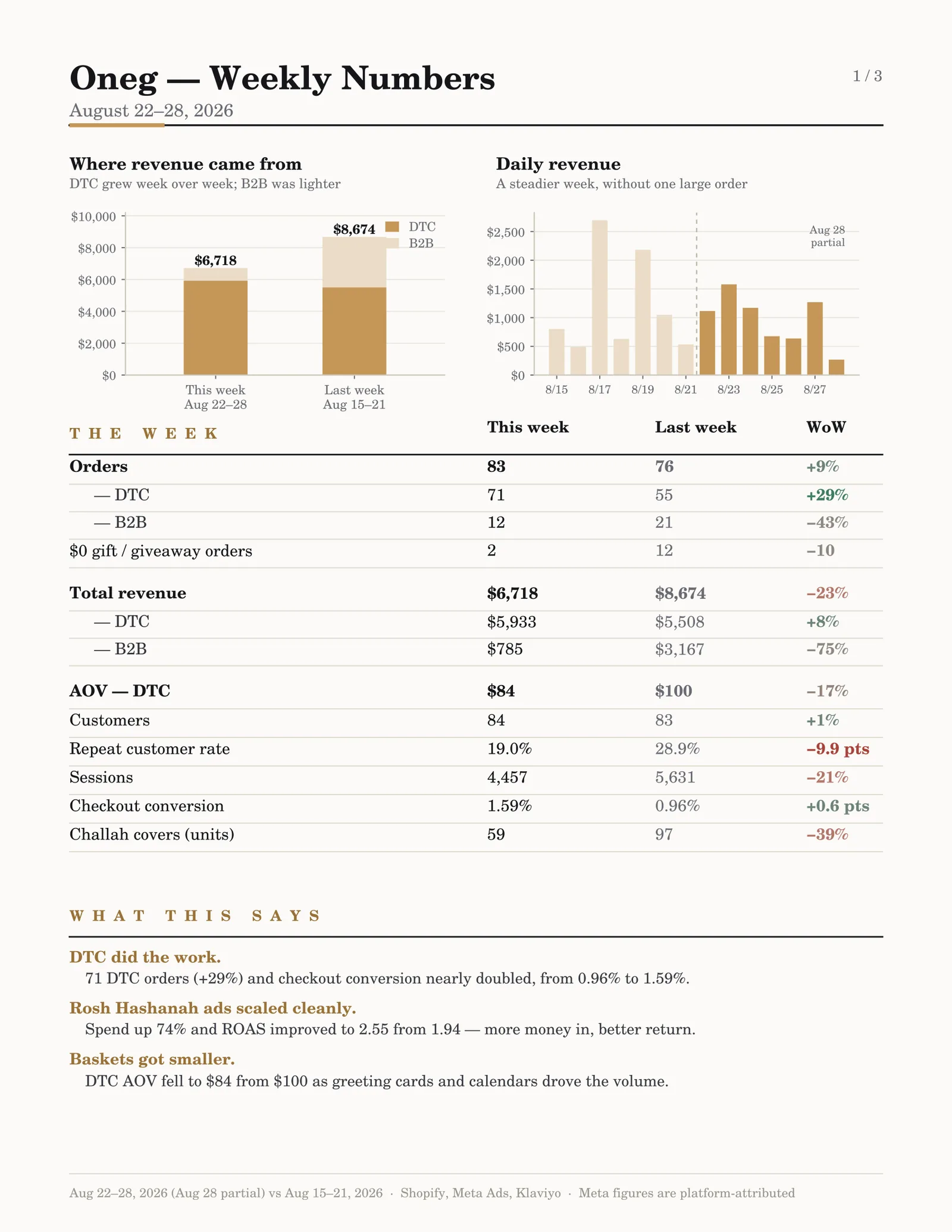
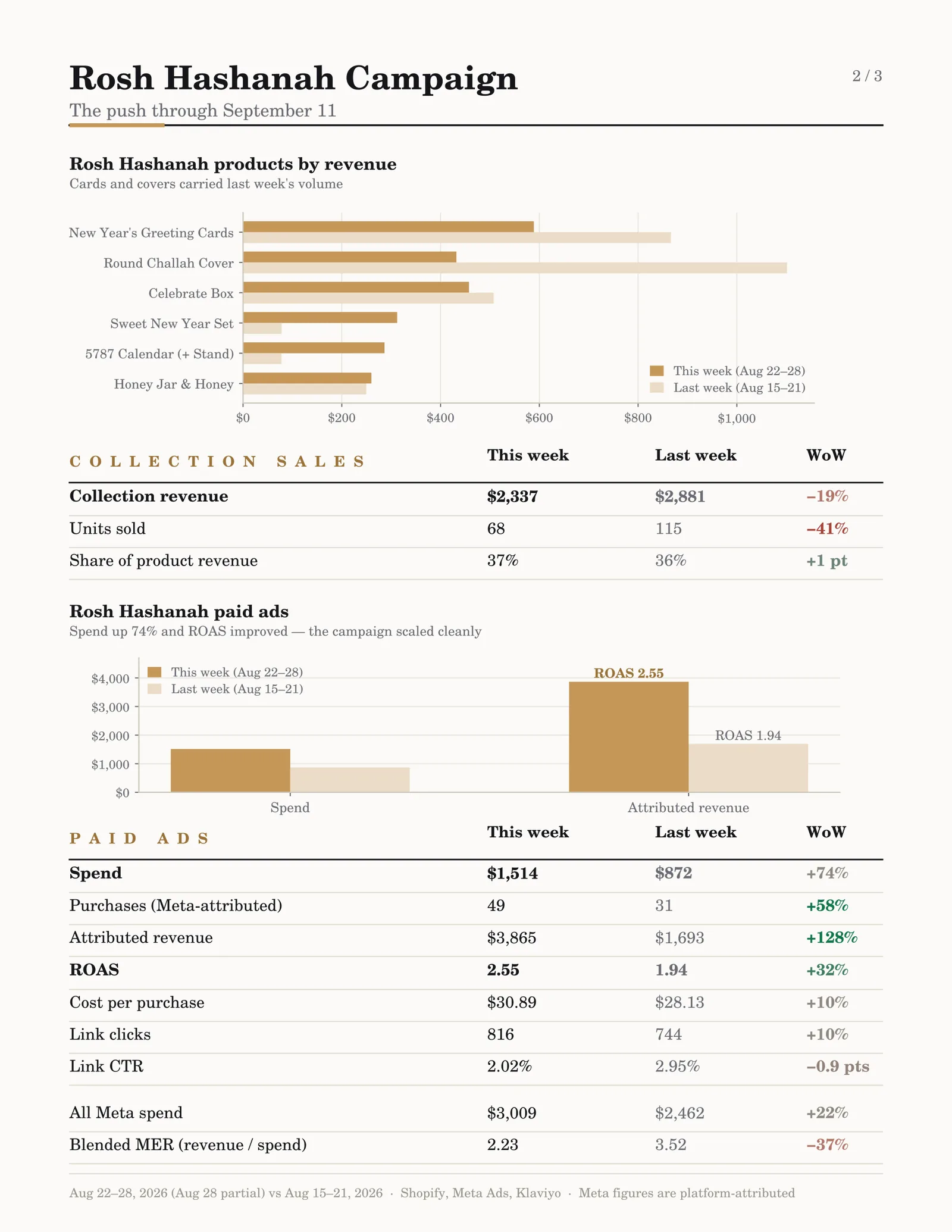
I built a weekly reporting system with key metrics to make sure we stayed aligned between sales, marketing, ads, and finance. This also allowed us to pivot as necessary with our ad spend and discounting mechanics.
 1 / 3
1 / 3
Two calls came out of that reporting:
- Cutting calendar ad spend. ROAS was 0.7 while greeting cards sat at 4.1 and the Sweet New Year Set 3.7. We moved its budget to the greeting cards and the box.
- Holding the box price. Partway through, the box dropped from $175 to around $105 to speed up sales while the Meta campaigns were still in their learning phase. I argued for holding the price until they settled, and I think the cut cost potential earnings.
Results
- Highest revenue month in company history: about $60K from August 15 to September 15, against an average of about $25K for that same window in the past two years.
- Returning customers placed 20% of orders across the campaign and 25% at the peak week, up from 12%. The peak matched the goal I had set for the strategy’s entire first phase.
- Every ad dollar returned $4.90 during the campaign, against about $2.40 for the account normally.
- Checkout conversion nearly doubled in one week, from 0.96% to 1.59%.
- About 80% of holiday inventory had sold through by early September.
Weekly AOV fell from about $101 the week before launch to $84 at the height of the campaign, because the $38 greeting cards brought in many single-item orders, a lot of them from returning customers. For a company whose problem was one-time buyers, more orders at a smaller size was the right trade.
The repeat figures are weekly shares during the campaign, so they show how customers behaved around the holiday, and it will take more seasons to show a lasting change. Price increases across the catalog landed in the same weeks and didn’t clearly move revenue on their own.
The greeting cards were the surprise. Demand concentrated on an inexpensive item people bought to send to someone else, which points to a category of small, giftable products for every holiday on the calendar.
After
The campaign left a playbook for the rest of the Jewish calendar: a six-week timeline anchored to the holiday date, an asset list sized for a paid media agency, a two-track email structure, a production pipeline for a two-person creative team, and weekly reporting that catches a weak product inside a week. Hanukkah, Purim, and Passover were mapped to run the same way.
The work I care about here is the line from the numbers to the objects. A company losing $24 on every customer needed people to come back. Coming back required more occasions, more occasions required products that didn’t exist yet, and those products needed apples painted, a box sized, a price set, a page built, and an ad account read every week. I enjoyed architecting this process, and the importance of design at every stage.